Carbon Monoxide: Alarms and Furnaces
Short answer
Carbon monoxide from a furnace is invisible and odorless, so alarms do the noticing: put one on every level and outside sleeping areas, test monthly, and if one sounds, get outside before you call 911.
Penny Damper bench notes · updated
Jump to a section
Shop notes
- CDC says more than 400 Americans die each year from unintentional CO poisoning not linked to fires, more than 100,000 visit an emergency department and more than 14,000 are hospitalized.
- CPSC wants CO alarms on every level of the home and outside sleeping areas, battery-powered or with battery backup.
- Test alarms every month and replace them as the maker's instructions say, per the NFPA CO toolkit.
- When an alarm sounds, get outside to fresh air first, then call 911 or the fire department from there.
- CPSC advises a yearly professional inspection of furnaces, boilers, water heaters, chimneys, flues and vents.
- Never heat with an oven or grill, and run generators outdoors only, at least 20 feet from the home (CPSC).
How does a furnace make carbon monoxide?
Any furnace that burns gas, oil or propane makes some carbon monoxide; the venting is what carries it outside. CDC describes CO as an odorless, colorless gas produced when fossil fuel is burned, and names gas- and oil-burning furnaces among the household sources. Trouble starts when the burn goes wrong or the exhaust can't leave.
The ENERGY STAR maintenance checklist puts it in plain terms: a dirty burner or cracked heat exchanger causes improper burner operation, and either can make the equipment run less safely. CDC adds that vents and chimneys need to fit tightly so CO doesn't leak at the joints and pipes. Outside, snow and ice can block the flue; USFA and EPA both say to keep furnace vents clear after a storm.
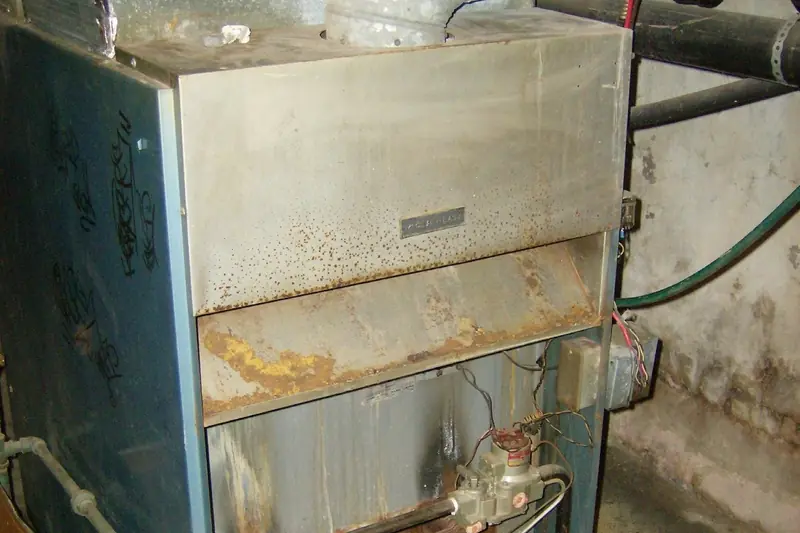
None of these are homeowner repairs. Burners, gas valves, heat exchangers and flue connections are a licensed technician's work. Your part is the alarms, the clear vents and the yearly inspection. ENERGY STAR notes that heat pumps involve no combustion and give off no carbon monoxide, though a gas water heater or fireplace in the same house still can.
Where should carbon monoxide alarms go?
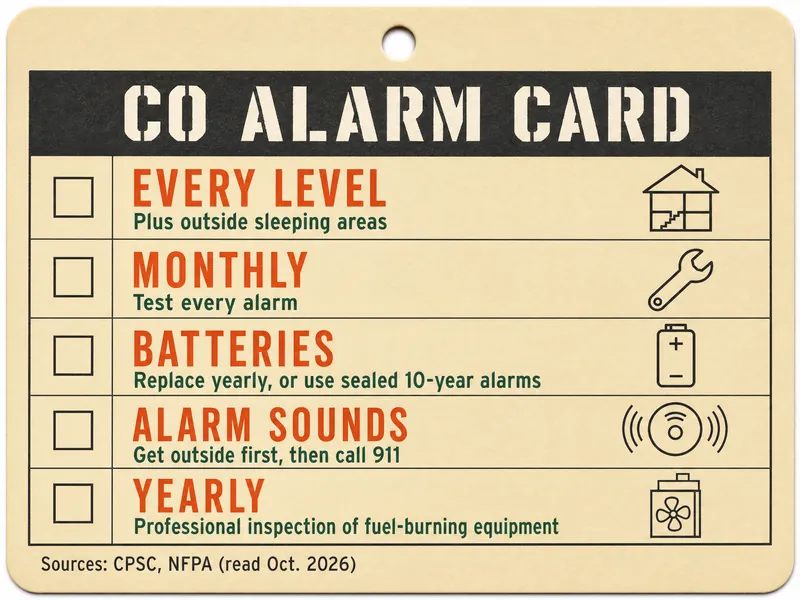
Put one on every level of the home and one outside each sleeping area. That is CPSC's rule, and USFA says the same: a central location outside each separate sleeping area and on every level. CDC asks for battery-operated or battery-backup detectors near every sleeping area.
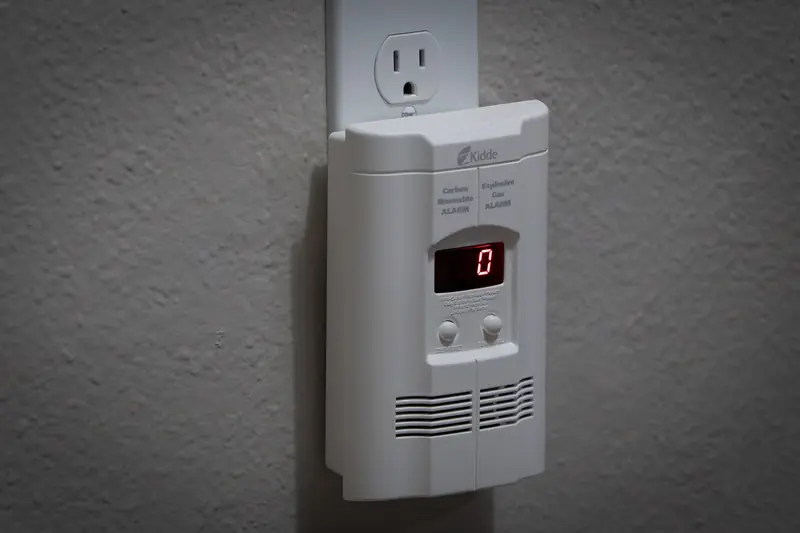
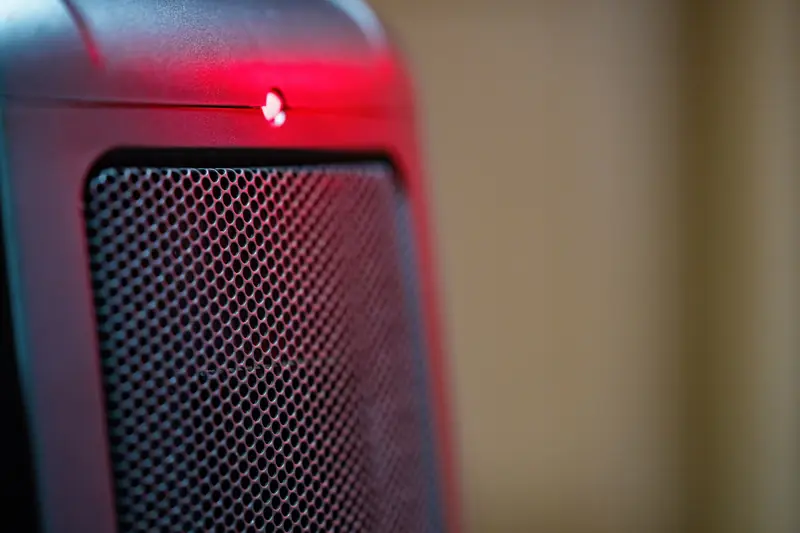
Power matters during the storms when furnaces work hardest. CPSC says alarms should run on batteries or have battery backup in case of an outage, and that interconnected alarms are best, because when one sounds, they all sound. A plug-in unit like the one pictured needs a backup battery to keep watching when the lights go out.
| Agency | Placement | Upkeep |
|---|---|---|
| CPSC | Every level and outside sleeping areas; interconnected is best | Test monthly; batteries yearly or sealed 10-year batteries |
| USFA | Central spot outside each sleeping area, every level | Keep dryer, furnace, stove and fireplace vents clear of snow |
| CDC | Near every sleeping area; battery or battery backup | Yearly service of heating system and gas appliances |
| NFPA | — | Test monthly; replace per manufacturer's instructions |
| EPA | — | Replace an alarm more than 10 years old |
What are the symptoms of CO poisoning?
CDC lists headache, dizziness, weakness, upset stomach, vomiting, chest pain and confusion as the most common symptoms. EPA's winter air page lists the same signs and says to get to fresh air quickly if your alarm sounds or you recognize them.
Some people are at more risk. CDC names infants, the elderly, and people with chronic heart disease, anemia or breathing problems. It also warns that people who are sleeping, drunk or under the influence of other substances can die from CO poisoning, which is why an alarm outside the bedrooms matters more than one in the basement alone.
What should you do if a CO alarm sounds?
Get everyone outside to fresh air right away, then call 911 or the fire department from outside. NFPA says to move immediately to fresh air outdoors or by an open window or door, call for help from there, and stay until emergency personnel declare it safe to go back in. CPSC's CO alarm lesson says the same: move to fresh air outdoors and call the fire department from there.
Don't stay to hunt for the source, open windows room by room or reset the furnace. If you smell gas instead, the order is the same: leave first, touch no light switches or phones on the way, and call 911 or the gas utility once you're outside.
A short chirp is different from the full alarm. NFPA says that if the trouble signal sounds, check for low batteries and replace them. If you can't tell which you're hearing, treat it as an alarm and go outside.
How do you prevent CO problems?
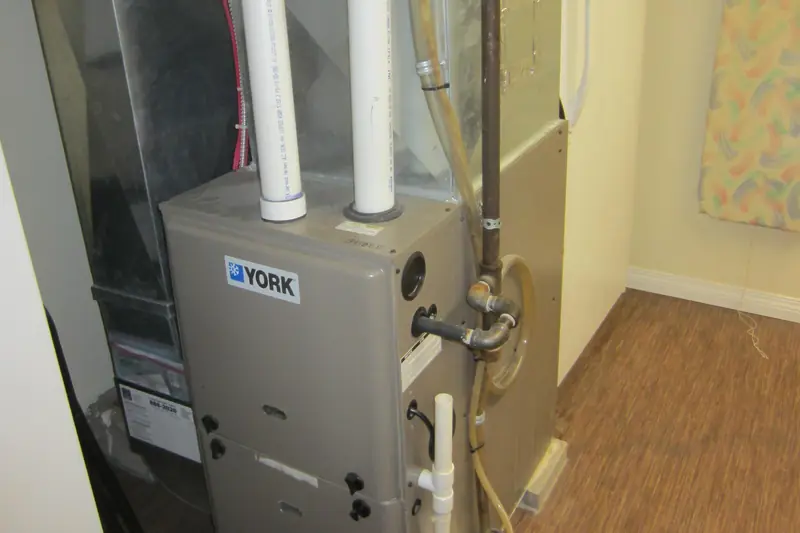
Have a professional inspect every fuel-burning appliance each year, and keep the alarms working in between. CPSC lists furnaces, boilers, fireplaces, wood stoves, water heaters, chimneys, flues and vents for that yearly inspection, and CDC asks for the heating system and other gas, oil or coal appliances to be serviced by a qualified technician every year. The furnace checks page covers what you can safely look at between visits.
Alarm upkeep is cheap. CPSC says test alarms every month and replace batteries at least once a year, or choose alarms with sealed 10-year batteries. NFPA says to replace the alarm itself according to the manufacturer, and EPA treats an alarm more than 10 years old as due for replacement.
Then avoid the classic mistakes. Never heat the house with a gas oven or a grill; CDC, EPA and USFA all warn against it, and the space heater page covers electric heat safely. CPSC says to run portable generators outside only, at least 20 feet from the home, and counts about 750 generator CO deaths from 2012 to 2022. After a snowstorm, clear the furnace and dryer vents. Sealing ducts or tightening a house changes how air moves around fuel-burning equipment, so DOE wants that work tested for combustion safety; see duct leaks. If you're unsure, call a licensed technician.
How these numbers were checked
This page relies on CDC's carbon monoxide basics page, CPSC's January 2026 winter safety release, its CO alarm mini-lesson and 2025 winter flyer, USFA's CO page, EPA's winter indoor air page, the NFPA CO toolkit, the ENERGY STAR maintenance checklist and DOE's Energy Saver Guide (2022), read in October 2026. Agencies count CO deaths differently (CDC more than 400, USFA more than 150), so each figure carries its source. Left out: alarm brand or price comparisons, ppm thresholds and medical treatment advice.
More questions
Can a furnace leak carbon monoxide when it is turned off?
A furnace that isn't burning fuel isn't making CO, but a gas water heater or other fuel-burning appliance in the house may still be running. Keep alarms on every level regardless of the season.
Do I need a CO alarm if my house is all electric?
CPSC's advice on alarm placement applies to homes generally, and a fireplace, gas appliance or generator run too close to the house can all be CO sources. If anything in or near the house burns fuel, install alarms on every level and outside sleeping areas.
How long do CO alarms last?
Follow the replacement date or interval the maker gives, as NFPA advises. EPA says to replace a smoke or CO alarm more than 10 years old.
Should a CO alarm go near the furnace?
CPSC, USFA and CDC all focus on every level and the sleeping areas, so start there. Follow the alarm maker's instructions for distance from fuel-burning appliances.
What does a single chirp from a CO alarm mean?
NFPA calls it the trouble signal and says to check for low batteries and replace them. A continuous alarm means get outside and call 911.
Is a yearly furnace inspection really needed?
CPSC and CDC both advise yearly professional service of fuel-burning heating equipment. ENERGY STAR's checklist has the contractor check burner combustion and the heat exchanger, the parts that matter for CO.
Keep reading
Back to the Penny Damper front page