Section · 6 pages
What Heating and Cooling Repairs Cost
Short answer
HVAC repair costs are mostly labor: common parts such as capacitors and igniters listed for $9 to $59 on October 27, 2026, while the visit, diagnosis and refrigerant work set the bill.
Penny Damper bench notes · updated
Shop notes
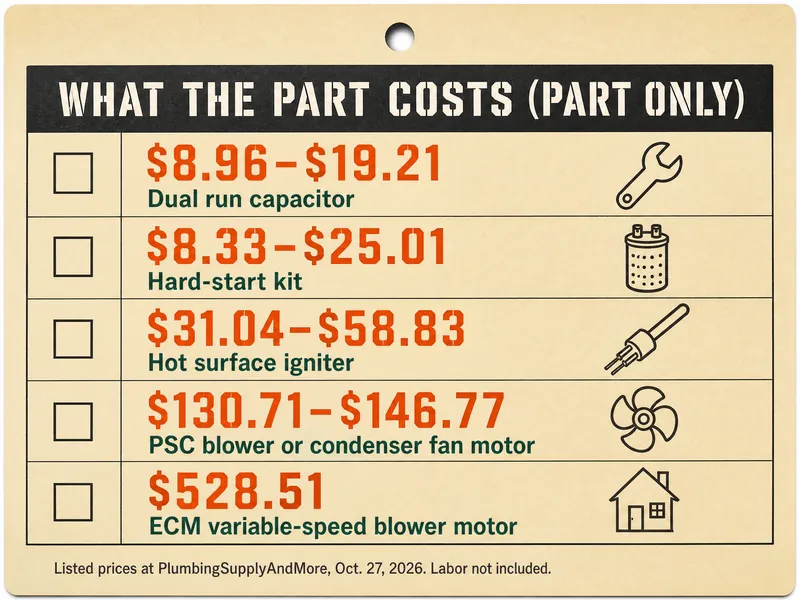
- Part prices on this site are listed prices at PlumbingSupplyAndMore read on October 27, 2026, part only; a round dual run capacitor ran $8.96 to $19.21.
- Hot surface igniters listed at $31.04 to $58.83 and universal PSC blower or condenser fan motors up to 1/2 hp at $130.71 to $146.77 that day; one ECM variable-speed blower motor listed at $528.51.
- The BLS median wage for HVAC mechanics was $29.33 an hour, $61,010 a year, in May 2025.
- Only EPA Section 608-certified technicians may buy refrigerant, which is why leak and compressor jobs cost the most.
- ENERGY STAR gives two replacement prompts: an air conditioner or heat pump past 10 years, a furnace or boiler past 15.
- Penny Damper never prints total job prices; ask for the diagnosis and an itemized quote in writing.
What do the common parts cost?
Most small repair parts list for under $60, and motors run from about $131 to $529. The table below is the full set of part prices this site uses, read from one supply house's listings on October 27, 2026. Every figure is the part only, with no labor, trip charge or tax.
| Part | What was listed | Price, part only |
|---|---|---|
| Dual run capacitor | Round, 440 V, rated 25/5 up to 80/5 µF | $8.96–$19.21 |
| Hard-start kit | Start capacitor and relay kits | $8.33–$25.01 |
| Hot surface igniter | Two furnace igniters | $31.04–$58.83 |
| Thermocouple | For standing-pilot equipment | $12.71–$14.53 |
| PSC blower or condenser fan motor | Universal motors up to 1/2 hp (3/4 hp and belt-drive ran to $192.57) | $130.71–$146.77 |
| ECM blower motor | One variable-speed motor | $528.51 |
| Pleated MERV 8 filter, 1 inch | Common sizes | $5.22–$14.17 |
| Condensate pump | Standard pumps (a flat neutralizing pump listed at $181.37) | $47.61–$82.20 |
| Thermostat | Common non-Wi-Fi models; Wi-Fi models ran $75.89–$279.00 | $30.44–$91.34 |
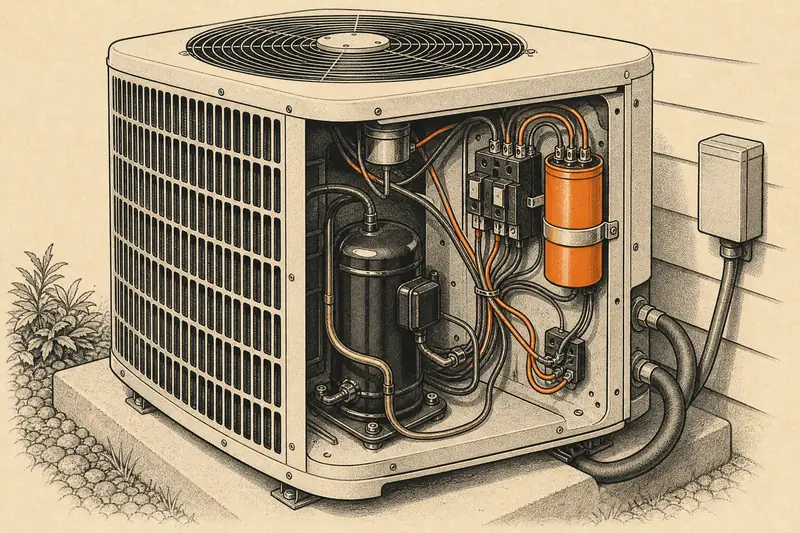
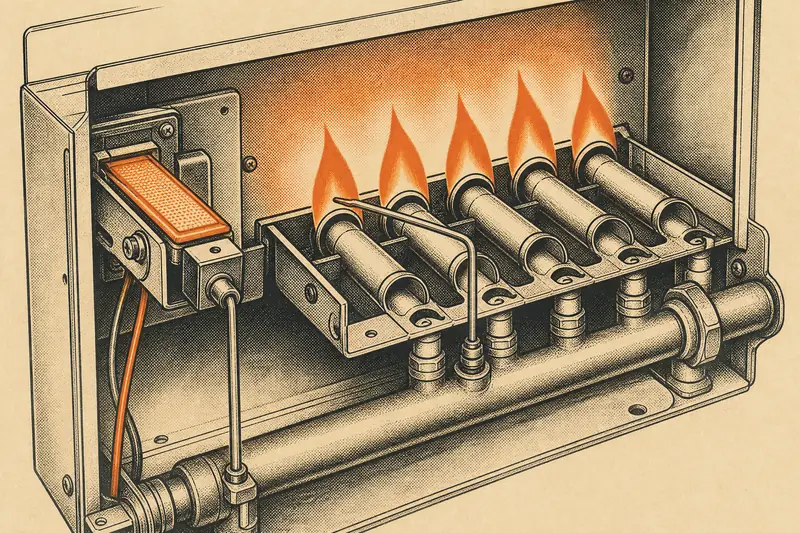
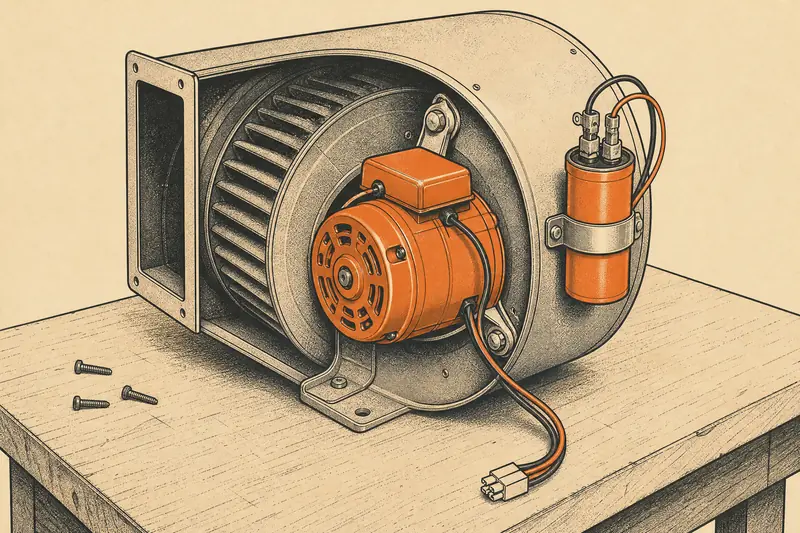
The low part prices explain a common surprise: the invoice for a $15 capacitor is mostly the visit. Each cost page below says what the part does, the signs it has failed, and which work is a technician's.
What makes the labor bill bigger?
Time, travel, diagnosis, certification and overhead make the labor line larger than the hourly wage. The BLS median of $29.33 an hour is what the technician earns; a company's rate also pays for the truck, insurance, test meters, recovery equipment and the hours that never reach an invoice. That's why this site explains labor instead of guessing it.
Several things push the labor line up on a given job. A diagnosis takes longer when symptoms overlap, such as a humming unit that could be a capacitor or a compressor. Refrigerant work needs a certified technician, a recovery machine and a vacuum pump. Gas-side work needs a full test cycle afterward. Hard-to-reach equipment in an attic or crawl space adds hours.
You can keep it down. Run the safe checks first (thermostat, breaker, filter, outdoor unit clear) so you don't pay for a visit that a dead battery would have solved; the safe upkeep hub lists them. Then ask for the diagnosis in writing and an itemized quote that names each part and its model number.
Repair numbers
- $29.33Median hourly wage, HVAC mechanics, May 2025BLS
- $8.96–$19.21Round dual run capacitor as listed Oct. 27, 2026, no laborPlumbingSupplyAndMore listings
- $528.51One listed ECM blower motor (variable speed), Oct. 27, 2026, no laborPlumbingSupplyAndMore listings
- 10 / 15 yearsReplacement-age prompts: AC or heat pump / furnace or boilerENERGY STAR
- Up to 30%How much efficiency a poor install can costENERGY STAR
Which repairs are expensive?
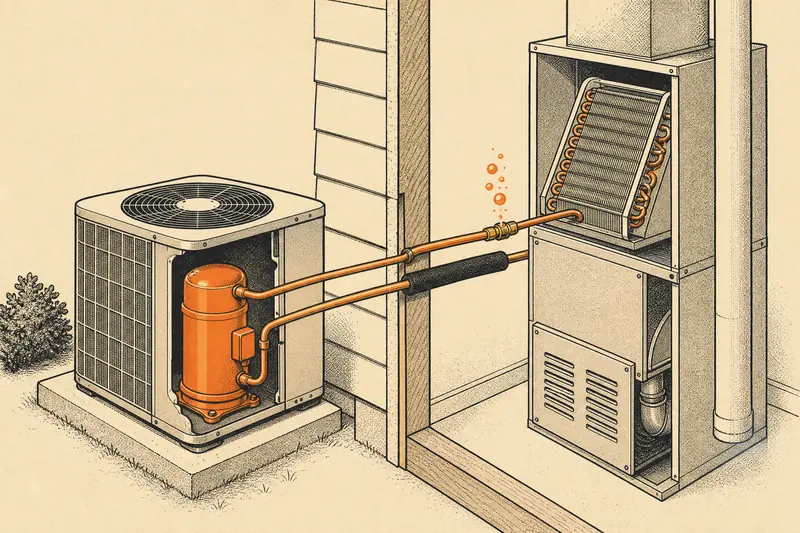
Anything that opens the refrigerant circuit or replaces a major component costs the most. EPA says only certified technicians may buy refrigerant or service equipment that could release it, and venting it is illegal, so a leak repair or compressor swap involves recovery, brazing, evacuation and recharge. EPA's 2026 final rule keeps R-410A systems repairable but expects that refrigerant's price may rise.
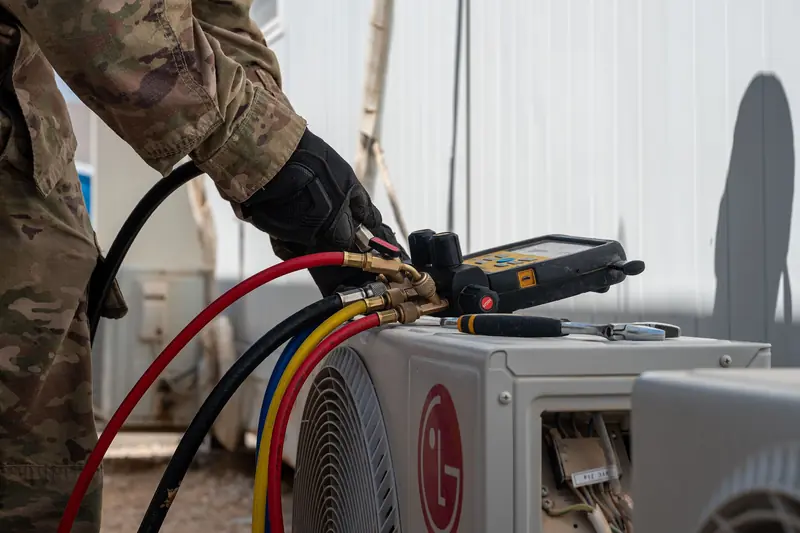
On the heating side, Carrier's furnace parts guide calls the heat exchanger typically the most expensive part to replace, and ENERGY STAR's maintenance checklist says a cracked one can make equipment run less safely. ECM blower motors also cost several times a PSC motor. None of these are homeowner jobs. If you're unsure, call a licensed technician.
When is replacing cheaper?
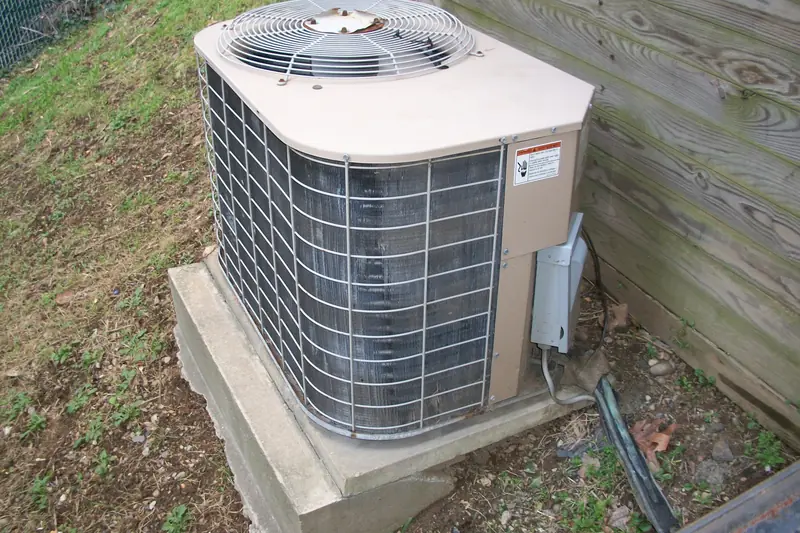
Replacing tends to win when the system is old, the repair is large, or the repairs keep coming. ENERGY STAR's age prompts are 10 years for an air conditioner or heat pump and 15 for a furnace or boiler. The "$5,000 rule" multiplies the system's age by the repair cost; it is a trade rule of thumb, and no agency publishes it.
Efficiency counts in the comparison. ENERGY STAR puts the possible saving from a correctly installed high-efficiency unit at up to 20 percent of what you spend on heating and cooling, and warns that a poor installation can sap up to 30 percent of a system's efficiency, so a cheap install can erase the gain. New central air conditioners must meet the 2023 SEER2 minimums. The IRS ended the 25C and 25D credits for anything placed in service after 2025, so a 2026 install gets neither.
 Repair or replace: a simple cost testRepair costs
 HVAC financing red flagsBill help
 Help paying heating and cooling billsSection
How these numbers were checked
This hub rests on BLS wage data for May 2025, EPA's refrigerant sales restriction and its 2026 HFC rule, three ENERGY STAR pages (replace, heating and cooling, maintenance checklist), Carrier's furnace parts guide and the IRS notice ending the 25C and 25D credits, all read in October 2026. Part prices come from listings at PlumbingSupplyAndMore read on October 27, 2026, part only; that supply house shares owners with Penny Damper. Labor estimates, total job prices and contractor price surveys are left out.
More questions
Why is the part so cheap and the bill so high?
The part is a small share of a service call. The bill pays for travel, diagnosis, the technician's time and the company's overhead, which is why a written, itemized quote is worth asking for.
Can I supply my own part to save money?
Some companies will install a customer's part and some won't, and those that do may not warranty it. The part also has to match the equipment exactly, so ask before buying.
Which repairs can a homeowner do?
Filters, thermostat settings and batteries, a single breaker reset, clearing the outdoor unit with power off, and flushing a condensate line with power off. Capacitors, motors, igniters, gas parts and refrigerant belong to a licensed technician.
Are these part prices current?
They are listed prices read on October 27, 2026, and supply-house prices change. Treat them as a dated reference, not a quote.
Do repair costs go up in summer and winter?
Penny Damper has no source on seasonal pricing. What is clear is that capacitors fail most in hot weather, Lennox says, so a spring check of the outdoor unit can catch one early.
Does a warranty cover labor?
Usually a maker's warranty covers parts, and labor coverage depends on the certificate and any installer warranty. Carrier advises checking both before authorizing a repair.
Is LIHEAP able to help with a repair bill?
LIHEAP can cover energy-related minor home repairs in states that choose to offer them. Apply through your state or local agency; see the LIHEAP page.
Back to the Penny Damper front page