Refrigerant Leaks and the R-410A Change
Short answer
AC refrigerant leak repair means a certified technician finds and fixes the leak before recharging; a top-up alone just pays for refrigerant that will escape again.
Penny Damper bench notes · updated
Jump to a section
Shop notes
- An air conditioner doesn't use up refrigerant. Low refrigerant means a leak, and Carrier says a technician must find and repair it before recharging.
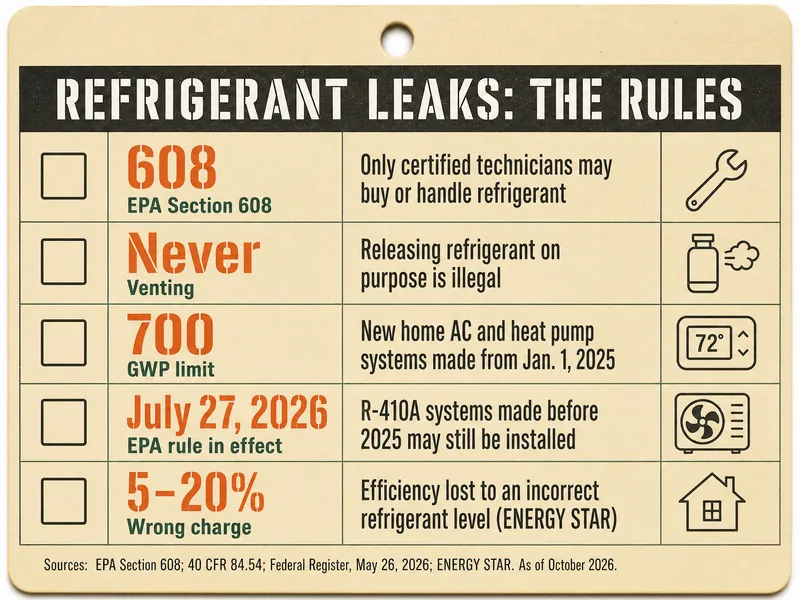
- Only technicians certified under EPA Section 608 may buy refrigerant for a home AC, and venting it on purpose is illegal.
- A wrong refrigerant level can cut efficiency by 5 to 20 percent, per an older ENERGY STAR guide.
- Home AC and heat pump systems made or imported since Jan. 1, 2025 must use a refrigerant with a global warming potential (GWP) under 700 (40 CFR 84.54); leftover R-410A systems made before 2025 may still be installed.
- As of October 2026, an EPA rule effective July 27, 2026 lets R-410A systems built before 2025 still be installed, and existing R-410A systems can still be repaired.
- EPA expects the price of R-410A "may rise" as the phasedown continues, which matters for a system that leaks every summer.
How do you know an AC has a refrigerant leak?
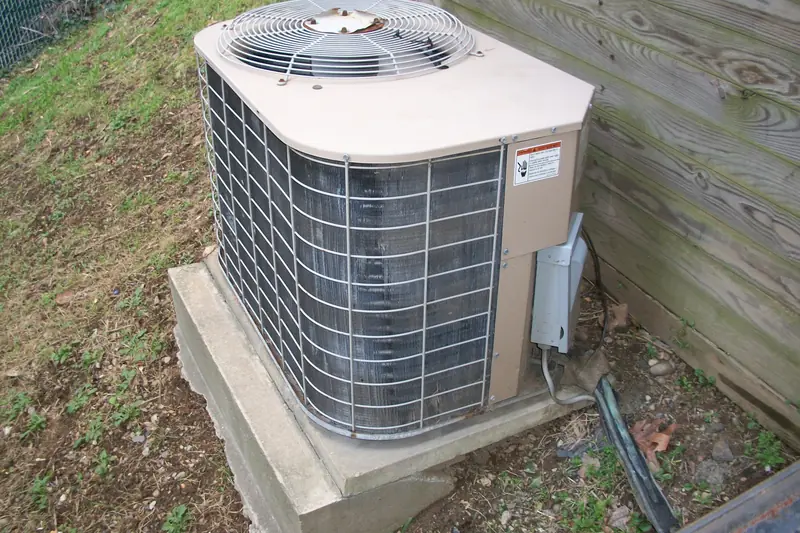
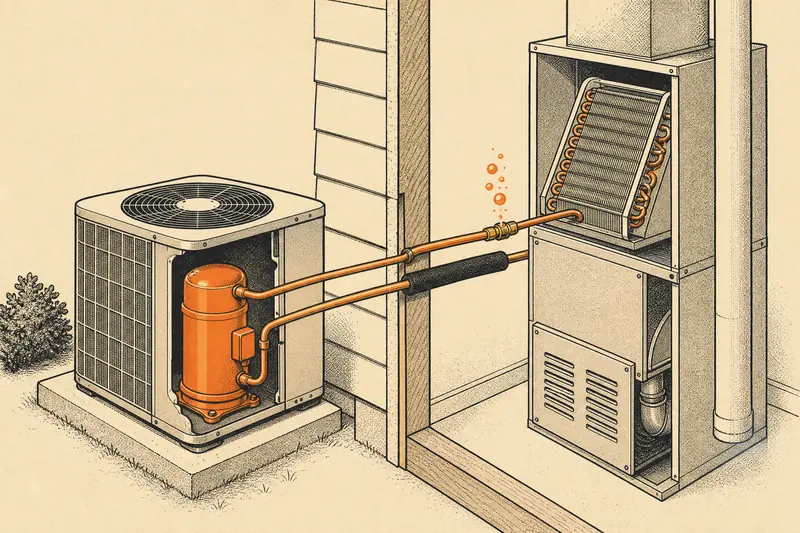
The usual signs are warm air from the vents, ice on the indoor coil or the copper line, a hissing sound, or an oily film near a fitting. Trane says an oily residue around the indoor coil or a hissing noise is a reason to call an HVAC professional right away. Carrier explains why ice forms: a leak or low charge "can cause the pressure in the AC coil to drop."
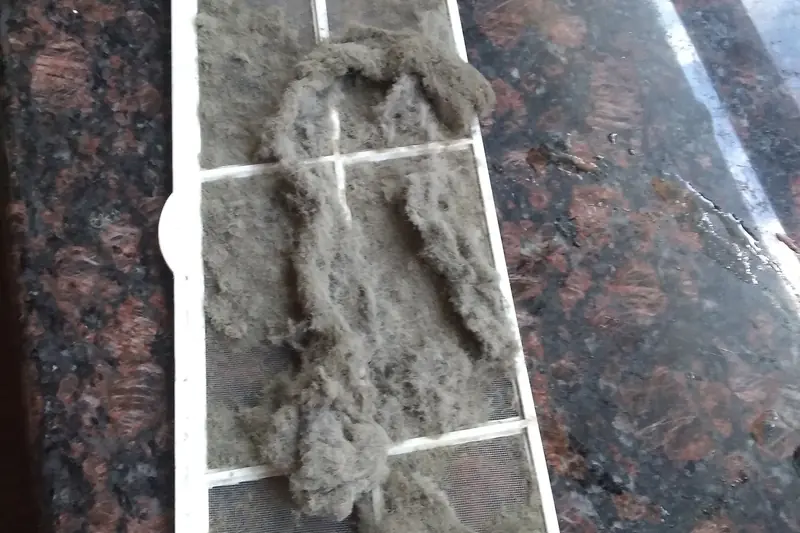
Ice has cheaper causes too, so rule those out before you pay for a leak search. A clogged filter or blocked return vents starve the coil of air and can freeze it with a full charge. Check the filter (pleated 1-inch MERV 8 filters were listed at $5.22 to $14.17, part only, at PlumbingSupplyAndMore on October 27, 2026; that supply house has the same owners as Penny Damper) and see the AC not cooling checks first.
If the coil is iced, switch the thermostat from Cool to Off and run the fan On so it thaws; Trane says that can take a few hours and warns never to chip at the ice. Don't restart cooling until the coil is clear and the filter is clean. If the ice comes back with a clean filter and open vents, the leak is the likely suspect.
Why is topping up refrigerant not a repair?
A top-up treats the symptom and leaves the hole. The system is sealed, so whatever leaked out last year will leak out again, and you pay for refrigerant and a service call each time. Carrier's wording is plain: a professional "must identify and repair it before recharging the system."
Running short also costs money while you wait. The ENERGY STAR maintenance checklist says too much or too little refrigerant makes a system less efficient and shortens equipment life, and its older 2009 heating and cooling guide puts the efficiency loss at 5 to 20 percent. A low charge can also overwork the compressor, the most expensive part in the box (see what a compressor replacement involves).
No federal rule forces a homeowner to fix a leak. EPA's frequent questions page says residential AC and heat pumps "are not included in the leak repair provisions" of its newer HFC rules, so the choice to repair, recharge or replace is yours. That makes the money test more important: ask for the leak location, the repair, and the recharge as separate lines on a written quote.
Who is allowed to handle refrigerant?
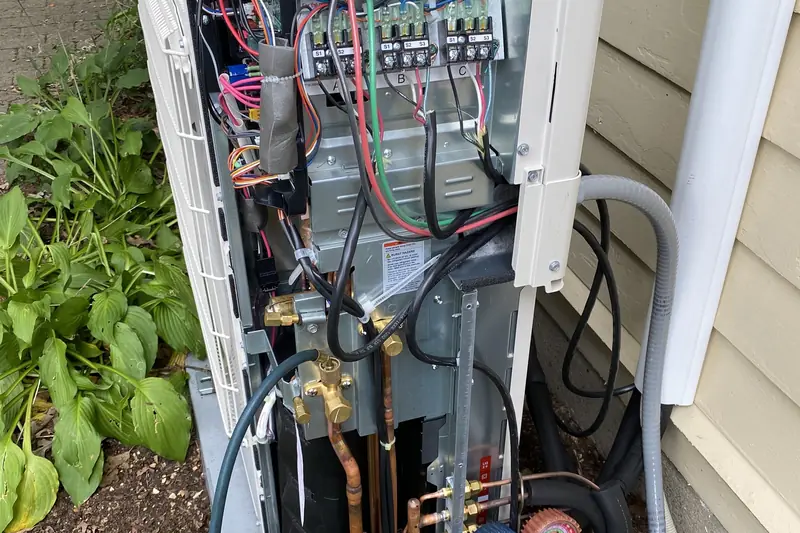
Only EPA-certified technicians may buy refrigerant or open the refrigerant circuit, with limited exceptions. EPA's technician certification page says anyone who maintains, services, repairs or disposes of equipment that could release refrigerant must be certified, and the venting prohibition bars releasing it on purpose.
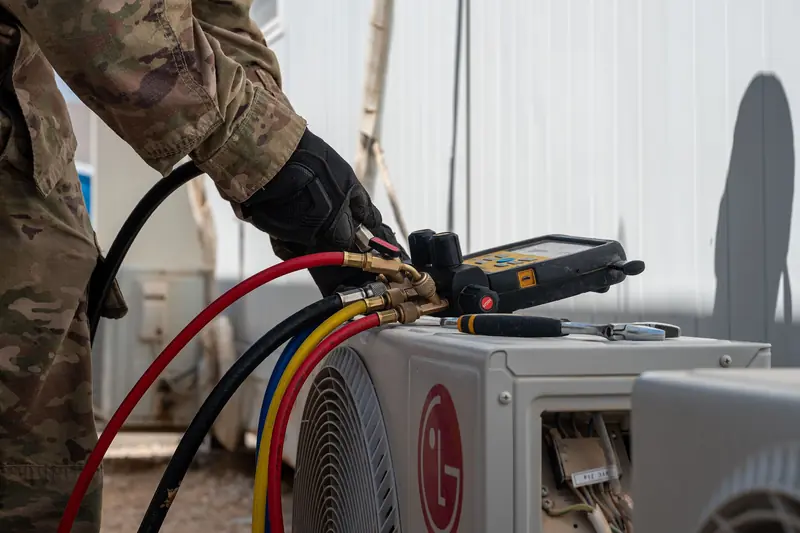
That rules out every do-it-yourself refrigerant job: no recharge kits, no gauges, no sealant cans. Your part is limited to the filter, the thermostat and keeping the outdoor unit clear; the safe upkeep list covers it. If you're unsure, call a licensed technician.
Labor is the bigger share of most leak bills, and nobody can quote it honestly without seeing the system. The Bureau of Labor Statistics puts the median pay for HVAC mechanics at $29.33 an hour (May 2025). A company's hourly rate is higher than that because it also pays for the truck, insurance, recovery equipment and the time spent hunting for a slow leak.
Refrigerant numbers
- 608EPA certification section for anyone who buys or handles refrigerantEPA
- 700GWP limit for new home AC and heat pump systems from Jan. 1, 202540 CFR 84.54
- July 27, 2026EPA rule took effect allowing pre-2025 R-410A systems to be installedFederal Register
- 5–20%Efficiency lost to an incorrect refrigerant levelENERGY STAR (2009 guide)
- $29.33Median hourly pay, HVAC mechanics, May 2025BLS
What is the R-410A to A2L change?
New home air conditioners and heat pumps made from 2025 on must use a refrigerant with a GWP below 700, which moved makers off R-410A and onto "A2L" refrigerants such as R-454B and R-32. The limit is in 40 CFR 84.54, and EPA confirms the GWP of R-32 is below 700. A2L means mildly flammable, so EPA rules prohibit putting R-32 or R-454B into equipment that wasn't designed for them.
The install deadline moved in 2026. A December 2023 rule had said leftover R-410A systems built before 2025 could be installed only until Jan. 1, 2026. EPA's final rule, effective July 27, 2026 per the Federal Register, removed that date, and EPA's summary of the rule says pre-2025 inventory may be installed "until supply runs out."
| Refrigerant | New systems made from 2025 | Existing systems | Who may handle it |
|---|---|---|---|
| R-410A | New designs moved to A2Ls; units made before 2025 may still be installed | Can be repaired and serviced | EPA 608-certified tech |
| R-32 (A2L) | Allowed; GWP below 700 | Only in equipment designed for it | EPA 608-certified tech |
| R-454B (A2L) | Used in new systems | Only in equipment designed for it | EPA 608-certified tech |
Can you still get R-410A for an older system?
Yes. As of October 2026, EPA says HFCs "will continue to be available including to service existing equipment," and the final rule says the agency sees no need "to restrict the repair of R-410A systems." The same rule warns that the price of legacy refrigerant "may rise as the phasedown continues," and that R-454B was hard to find in the field during 2025.
Makers can still build R-410A condensing units for repairs, but they must carry a label reading "For servicing existing equipment only." Watch the scope of a quote: EPA's frequent questions say replacing both the outdoor unit and the indoor coil counts as a new system, while repairing a system over time is allowed.
For an older system with a repeat leak, the arithmetic usually points one way. Add up the refrigerant you have bought in recent years, the cost of the leak repair now, and the age of the system against ENERGY STAR's age signal for an AC or heat pump (more than 10 years old), then run the repair or replace test. If a replacement wins, check the SEER2 minimums for your region before comparing quotes.
How these numbers were checked
Based on EPA's Section 608 pages (2026 updates), 40 CFR 84.54 (eCFR, current text), the EPA final rule published in the Federal Register on May 26, 2026 and effective July 27, 2026, EPA's HFC frequent questions (updated Sept. 14, 2026), the ENERGY STAR maintenance checklist and 2009 guide, Carrier and Trane homeowner pages, and the BLS Occupational Outlook (May 2025 pay). All read October 27, 2026. Left out: refrigerant prices per pound, typical charge sizes in pounds, any GWP figure for R-454B, labor or job totals, and the outdated EPA FAQ line about a 2026 install deadline.
More questions
Does an air conditioner ever need routine refrigerant refills?
No. The refrigerant circulates in a sealed loop and is not consumed. If a technician says the system is low, ask where the leak is and what fixing it would cost before agreeing to a recharge.
Are leak-stop sealants a safe shortcut?
Penny Damper doesn't recommend them, and they aren't a homeowner job anyway because adding anything to the circuit means opening it, which EPA limits to certified technicians. If a sealant was ever added to your system, tell any technician who works on it.
Is it legal to buy a can of R-410A online and add it myself?
EPA's sales restriction says only certified technicians may buy refrigerant for this kind of equipment, with limited exceptions. Adding refrigerant also means connecting to the service ports, which is certified work.
Can a newer A2L refrigerant go into my R-410A system?
No. EPA rules prohibit using mildly flammable refrigerants such as R-32 or R-454B in systems not designed for them. An R-410A system stays on R-410A for its whole life.
Will my R-410A system become illegal to run?
No federal rule makes running or repairing an existing R-410A system illegal, as of October 2026. The 700 GWP limit applies to newly made systems, and the July 2026 rule lets pre-2025 units still be installed.
Should I replace the whole system after one leak?
Not automatically. A single leak at an accessible fitting on a younger system can be a reasonable repair. A system past ENERGY STAR's 10-year mark with a leak in the coil is where a replacement quote is worth getting alongside the repair quote.
Related pages