Furnace Igniter and Flame Sensor Costs
Short answer
Furnace igniter replacement cost starts with a part listed at $31.04 to $58.83 on October 27, 2026; the rest of the bill is a licensed technician's diagnosis, fitting and safety test.
Penny Damper bench notes · updated
Partner links on this page go to PlumbingSupplyAndMore, under the same ownership as Penny Damper. They are there for price reference and examples; no figure here depends on them. How partner links work
Jump to a section
Shop notes
- Two hot surface igniters were listed at $31.04 and $58.83 at PlumbingSupplyAndMore on October 27, 2026, part only.
- Thermocouples for standing-pilot equipment listed for $12.71 to $14.53 the same day, also part only.
- Carrier says a furnace that starts and then shuts off after 2 to 5 seconds can point to a dirty or faulty flame sensor.
- Igniters are fragile: Carrier says skin oils on the element can create hot spots that crack it, and Trane's owner's guide calls the part "very fragile."
- HVAC mechanics earned a median $29.33 an hour in May 2025, according to the BLS.
- CPSC says to have a professional inspect fuel-burning heating systems every year.
How much does a furnace igniter replacement cost?
The part runs about $31 to $59 and the labor is the larger, local share. On October 27, 2026, a supply house under the same ownership as Penny Damper listed a maker-specific hot surface igniter at $31.04 and a universal kit at $58.83 (hot surface igniter listings). Those are part prices only, and the right igniter depends on the furnace model.
There is no honest single number for the whole job, so Penny Damper doesn't print one. The visit covers a trip, a diagnosis (an igniter that won't glow can also mean no power reaching it, a failed control board or a tripped safety switch), fitting a matched part without touching the element, and a full heating cycle to prove the burners light and the flame is sensed. The technician's company sets the hourly rate, and it has to fund vans, insurance, meters and training as well as wages.
For scale, BLS lists $61,010 as the median annual wage for heating and air conditioning mechanics in May 2025, which works out to $29.33 an hour. Get the diagnosis written down, and ask for an itemized quote that names the part and its model number before anyone starts. If the furnace is old and this is one more repair in a long list, run the repair-or-replace test first.
| Part | What it does | Part price, Oct. 27, 2026 |
|---|---|---|
| Hot surface igniter | Glows hot enough to light the gas when the thermostat calls for heat | $31.04–$58.83 |
| Flame sensor | Proves a flame is present, or the control shuts the gas valve | Not priced here |
| Thermocouple | On standing-pilot equipment, makes a small voltage when the pilot heats it | $12.71–$14.53 |
| Labor and diagnosis | Trip, testing, fitting, full cycle test | Local rate; BLS median $29.33/hr |
What does a hot surface igniter do?
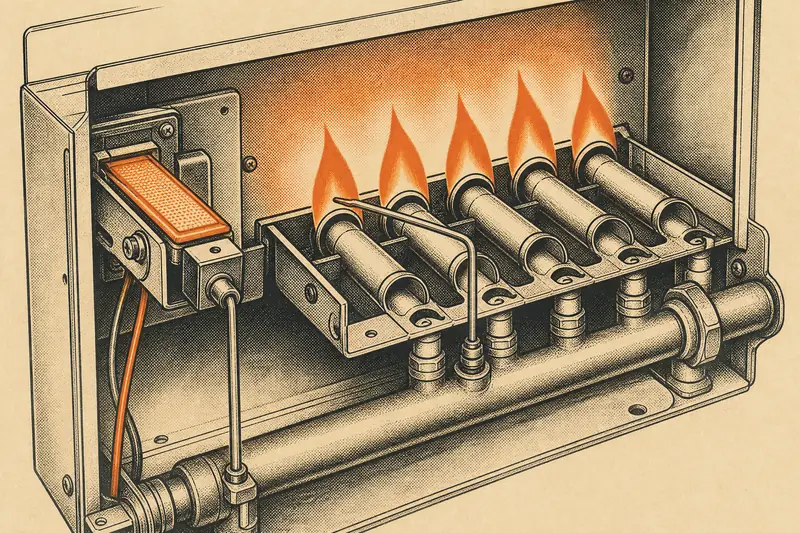
It lights the burners. Carrier's igniter guide says electrical current heats the element "until it glows and can ignite the gas," much like a lightbulb filament. When the thermostat calls for heat, the control runs its safety checks, the igniter heats up, and only then does the gas valve open.
Most modern gas furnaces use one instead of a standing pilot. Carrier notes that older furnaces burned a small pilot flame all year, while an igniter only works when heat is needed. Carrier names silicon nitride and silicon carbide as the common element materials.
How do you tell the igniter has failed?
The main sign is no orange glow at startup and no flame, while the furnace goes through the rest of its sequence. Carrier lists the furnace blowing cold air, short cycling and the missing glow, and says that if a furnace "clicks but never roars to life, the ignitor is a likely culprit." After a few failed tries, many furnaces lock out and flash a fault code on the control board.
You can observe without opening anything. Look through the sight glass or louvers in the front panel during a call for heat, if your furnace has one, and note whether you see a glow. Before you call, run the safe checks on the furnace not working page: thermostat set to Heat, fresh batteries, the furnace power switch on, the breaker on (one reset only), and a clean filter.
Leave the panels on. Carrier says homeowners should avoid touching the igniter element because skin oils shorten its life, and Trane's owner's guide warns the igniter "is very fragile and should be handled with care." A cracked igniter, a bad control and a tripped limit switch can look alike, and only testing tells them apart.
Ignition numbers
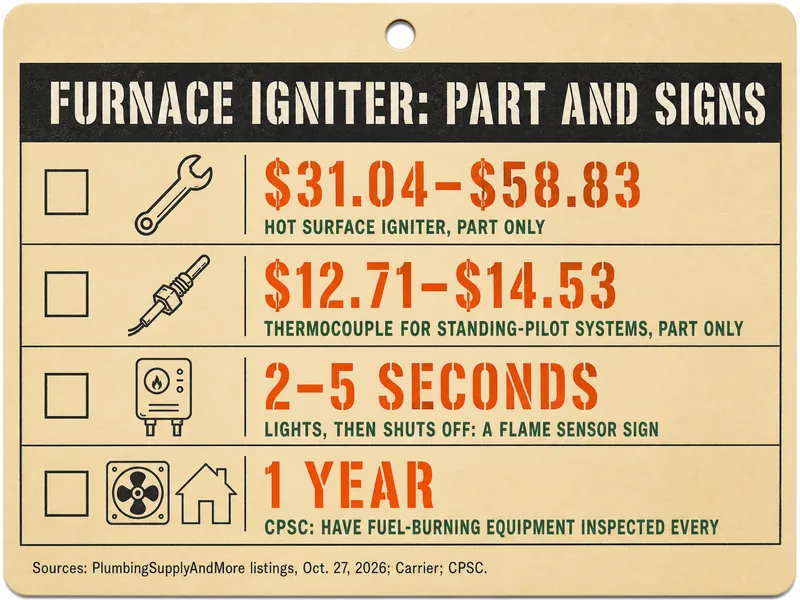
- $31.04–$58.83Hot surface igniter, part only, Oct. 27, 2026PlumbingSupplyAndMore (under the same ownership as Penny Damper) (PlumbingSupplyAndMore, under the same ownership as Penny Damper)
- $12.71–$14.53Thermocouple, part only, Oct. 27, 2026PlumbingSupplyAndMore (under the same ownership as Penny Damper) (PlumbingSupplyAndMore, under the same ownership as Penny Damper)
- 2–5 secondsFurnace lights then shuts off: a sign Carrier links to the flame sensorCarrier
- $29.33BLS median hourly wage, HVAC mechanics, May 2025BLS
- 1 yearHow often CPSC says to have fuel-burning heating inspectedCPSC
What does a flame sensor do?
The flame sensor confirms the burners actually lit, and if it can't, the furnace shuts the gas off. Carrier describes it as a thin metal rod in the burner assembly that passes a small current through the flame, a method called flame rectification. No signal means the control board closes the gas valve, which keeps unburned gas from building up.
A dirty sensor is a common reason a furnace lights and then quits after 2 to 5 seconds, Carrier says. The usual causes are carbon buildup or oxidation on the rod, a cracked ceramic insulator, or a rod bent out of the flame. Carrier's guidance is that a professional removes and cleans it, and replaces it if the furnace still short-cycles; flame sensors are not universal and must match the furnace.
Older furnaces with a standing pilot use a thermocouple instead, which Carrier says makes a small voltage when the pilot heats it. Same-day listings put thermocouples at $12.71 to $14.53 (thermocouple listings (PlumbingSupplyAndMore, under the same ownership as Penny Damper)), part only. Never bypass, disconnect or defeat either part. Carrier puts it bluntly: bypassing the flame sensor is dangerous and should never be attempted.
Why are gas furnace parts a licensed tech's job?
Because a mistake on the ignition side can mean unburned gas, fire or carbon monoxide. The ENERGY STAR maintenance checklist puts gas connections, gas pressure, burner combustion and the heat exchanger on the contractor's side of the list, and warns that faulty gas connections "are a fire hazard." Carrier says it recommends professional service for repairs involving gas lines, electrical parts or internal furnace components.
Igniters, flame sensors, gas valves, burners and thermocouples all sit in that zone. None of it is homeowner work, including relighting a standing pilot that has gone out; that stays with a licensed technician or the gas utility. If you're unsure, call a licensed technician.
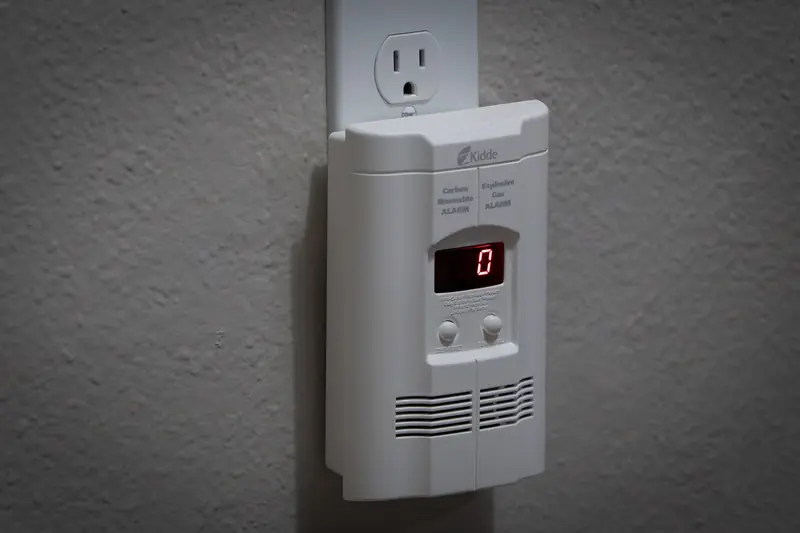
If you smell gas, don't troubleshoot at all. Leave the house first, don't flip switches or use a phone inside, and call 911 or the gas utility from outside. If a carbon monoxide alarm sounds, get everyone out to fresh air, then call 911 or the fire department; the carbon monoxide page covers alarm placement. CPSC also advises a yearly professional inspection of furnaces, boilers, water heaters, chimneys and vents, which is when a weak igniter or a fouled sensor usually gets caught.
How these numbers were checked
Based on Carrier's furnace igniter, flame sensor and furnace parts guides, a Trane indoor-unit owner's guide, the ENERGY STAR maintenance checklist, CPSC's January 2026 winter safety release and BLS wage data for May 2025, read in October 2026. Prices for igniters and thermocouples come from PlumbingSupplyAndMore's October 27, 2026 listings and cover the part alone. Not included: total repair prices, cost-guide figures, and any instructions for testing, cleaning or replacing gas-side parts.
More questions
How long does a furnace igniter last?
Carrier gives no single interval. It says igniters wear from high-heat cycles, surges and contamination, and that smaller parts such as igniters may need replacing sooner than major components.
Is a universal igniter as good as the maker's part?
It depends on the furnace. Carrier says replacement igniters should be matched to the equipment, and its documentation lists model-specific voltage and resistance ranges a technician checks.
Can a dirty flame sensor be cleaned instead of replaced?
Often, yes. Carrier says to start with cleaning by a professional; if the furnace still short-cycles, or the rod or ceramic insulator is cracked, the sensor gets replaced.
Why does my furnace click several times and then stop?
That pattern usually means repeated ignition tries followed by a lockout. The number of retries varies by model, Carrier says, so check the furnace manual and call a technician rather than cycling the power over and over.
Does a standing pilot furnace have an igniter?
No. A standing pilot burns continuously and uses a thermocouple to prove the flame. When that small flame won't stay lit, the fix (often the thermocouple) belongs to a technician or the gas company, not to you.
Is a yellow burner flame a problem?
Carrier lists a yellow or orange burner flame among reasons to call a qualified technician. Have it checked promptly, and make sure your carbon monoxide alarms work in the meantime.
Will cycling the breaker reset an igniter lockout?
It may clear a lockout, but it fixes nothing. One reset is reasonable; if the furnace locks out again, leave it and call a licensed technician.
More on repair costs