Furnace Not Working: Safe Checks First
Short answer
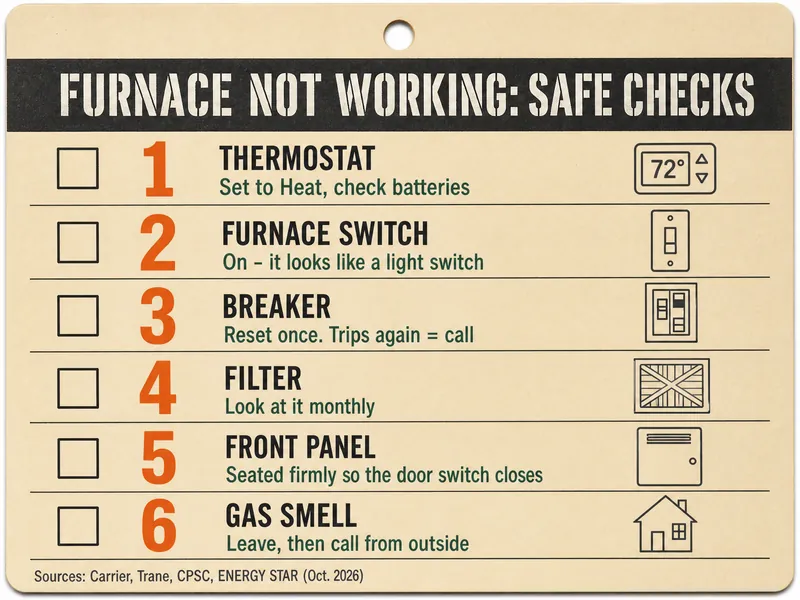
Furnace not working? Confirm the thermostat says Heat, the furnace switch is on, the breaker hasn't tripped, the filter is clean and the front panel is seated; if you smell gas, leave the house first.
Penny Damper bench notes · updated
Partner links on this page go to Central Plumbing HVAC, PlumbingSupplyAndMore, Quality Water Treatment, under the same ownership as Penny Damper. They are there for price reference and examples; no figure here depends on them. How partner links work
Jump to a section
Shop notes
- Carrier's furnace troubleshooting page starts with three checks: thermostat on Heat, furnace power switch on, filter not clogged.
- A loose front panel can trip a door safety switch and keep the burners off, Carrier notes.
- Reset a tripped furnace breaker once. Trane says a second trip means an electrical issue for your HVAC company.
- Smell gas: leave, touch no switches or phones inside, and call 911 or the gas utility from outside, as CPSC advises.
- Weil-McLain's boiler manual gives 12 psi as a typical cold-fill pressure for a home system.
- ENERGY STAR suggests considering replacement once a furnace or boiler passes 15 years.
Why is the furnace not working?
Most no-heat calls trace to something outside the burner box: a thermostat setting or dead batteries, a furnace switch flipped off, a tripped breaker, a choked filter, or a front panel that isn't latched. Carrier lists a safety switch "triggered by a loose front panel" among the causes, and Trane notes that newer furnaces carry sensors and a limit switch that stop the furnace when they detect a safety issue.
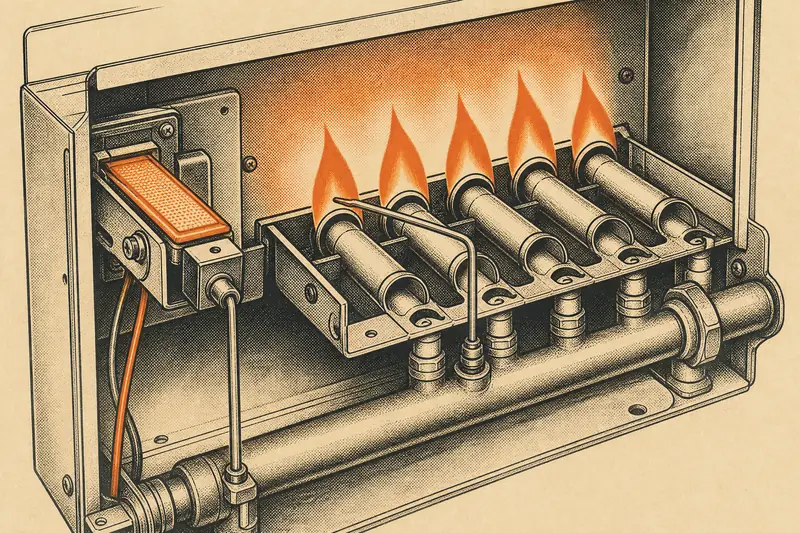
When those all check out, the fault is usually inside: an igniter, a flame sensor, a pressure switch, the draft motor or the control board. Those are technician jobs. For price context, hot surface igniters were listed at PlumbingSupplyAndMore for $31.04–$58.83 and thermocouples for $12.71–$14.53 on October 27, 2026, part only; the furnace igniter page explains what the rest of that bill pays for.
Which checks are safe to make yourself?
Safe checks stop at switches, the filter and the outside of the cabinet. Work through them in order.
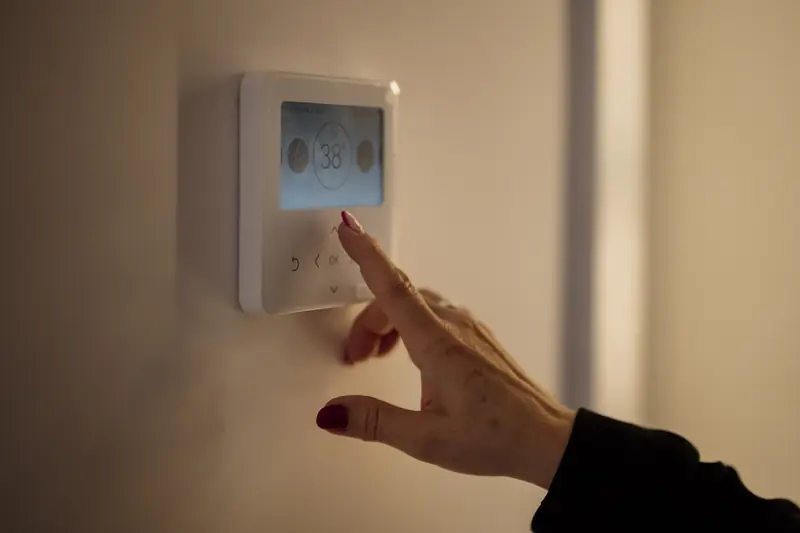
- Thermostat. Set it to Heat and a few degrees above room temperature. Carrier says a battery-powered thermostat may simply need new batteries. Trane suggests checking a programmable model's screen for an error code and following its manual.
- Furnace switch. Trane describes it as something like a light switch on the side of the furnace, a nearby wall or a ceiling joist. People flip it off by mistake.
- Breaker. Reset it a single time. A second trip is the furnace telling you it needs a professional.
- Filter. Carrier puts a clogged filter on its first-three list, since it chokes the airflow a furnace needs. ENERGY STAR says to look at it monthly and swap in a fresh one no later than every 3 months; MERV ratings covers which one to buy.
- Front panel. Make sure the blower door is pushed fully home so its safety switch closes.
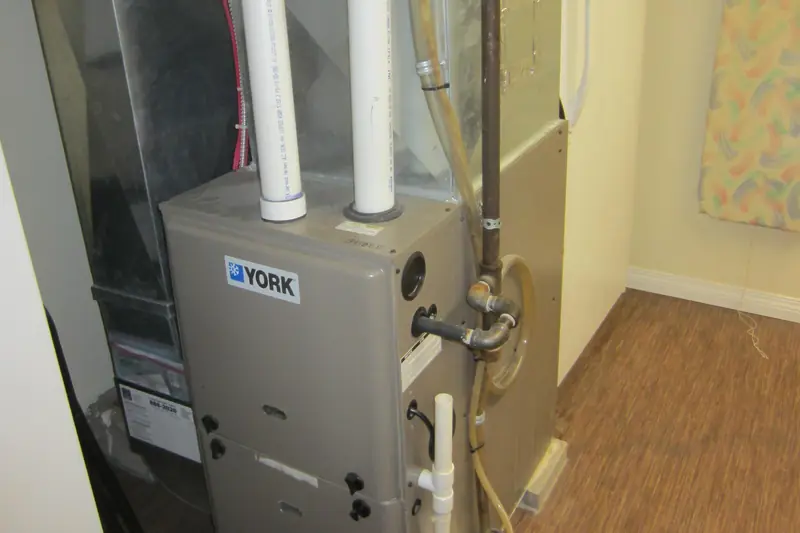
- Vents outside. After snow, EPA advises clearing furnace vents of snow and ice. On a condensing furnace like the one pictured, the plastic pipes end outside the wall or roof.
Never tape down, jumper or bypass a limit, rollout, pressure or door switch to get heat back. They shut the furnace off because something is wrong. Gas valves, burners, igniters and pilot assemblies stay closed to homeowners too; Carrier says to avoid repairs on gas, electrical or internal parts unless you are qualified. If a standing pilot has gone out, call a licensed technician or your gas utility rather than relighting it, and never touch anything if you smell gas.
What do the blinking lights mean?
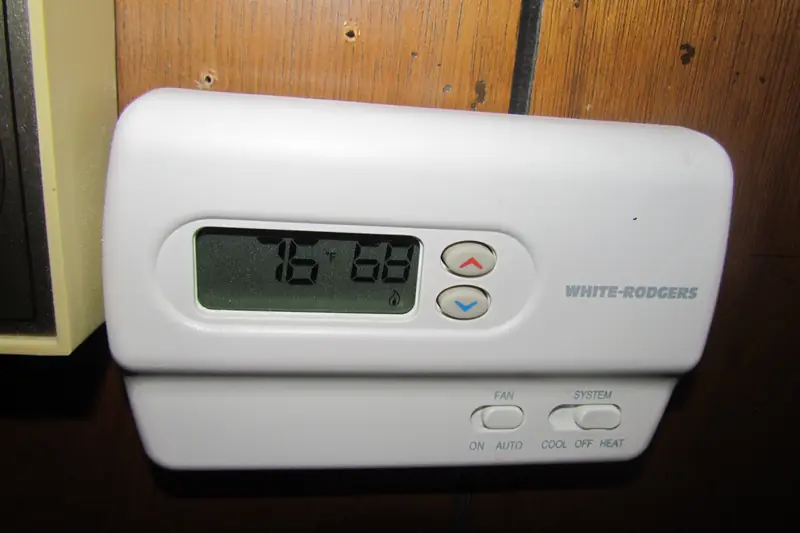
A blinking light on the control board is the furnace reporting a fault code, and reading it is the first thing a technician does. Trane says a service tech will check for error codes on the control board and go from there. Carrier lists error codes, repeated shutdowns, unusual noises and burning odors as signs that call for professional service.
What helps you is the record, not a repair. Before you call, note how the light blinks (count the flashes), when the furnace stopped and what you have already checked. That shortens the diagnostic visit you pay for. Don't keep cycling power to clear a code; a furnace that locks out again is telling the technician something.
What if you smell gas?
Leave the house first, then make the call from outside. CPSC says to leave immediately and contact local gas authorities from outside, and not to operate lights or phones before leaving, since a switch can spark. Carrier's furnace page adds: don't operate electrical switches, don't try to relight the furnace, and contact the gas utility or emergency services from a safe location.
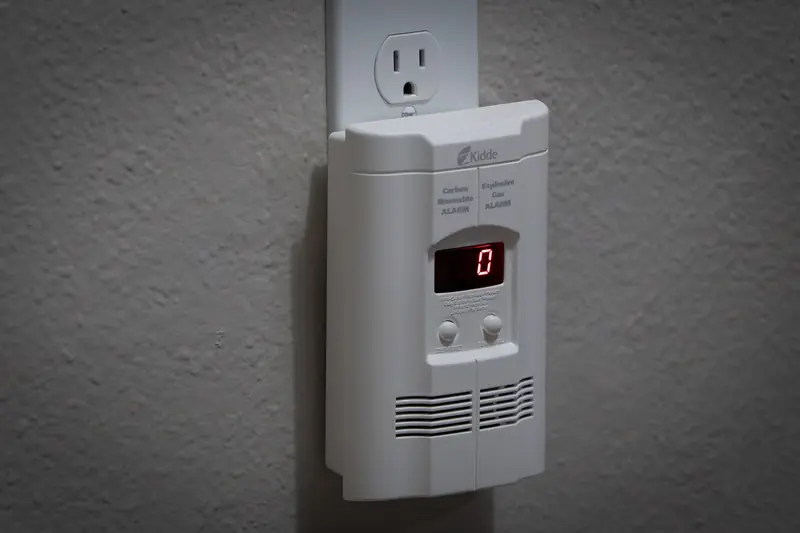
Once outside, call 911 or your gas utility. Don't go back in until they say it is safe. If a carbon monoxide alarm sounds instead, the drill is similar: get outside to fresh air, then call 911 or the fire department. The carbon monoxide page covers alarm placement and testing.
What about boiler homes?
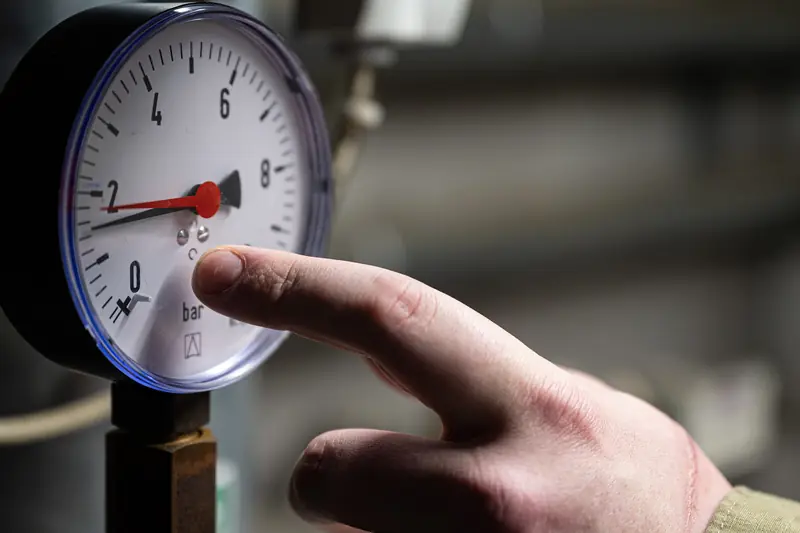
A hot-water boiler that won't heat may be low on pressure, and the gauge on the boiler is safe to read. Weil-McLain's CGa boiler manual gives 12 psi as a typical cold-fill pressure for a home system, says correct pressure varies by system, and lists a 30 psi relief valve on that model. The same manual says too high a rise while heating points to a waterlogged or undersized expansion tank. Those are the maker's figures for its own boiler; your boiler's label or manual rules.
Water quality matters over the years. The manual warns that constant fresh makeup water shortens boiler life, because minerals build up in the cast-iron sections, so leaks need fixing promptly. It tells owners in hard-water areas above 7 grains hardness to consult a local water treatment company. USGS adds that heated hard water can leave calcium carbonate scale in water heaters. Quality Water Treatment, which shares owners with Penny Damper, lists water softeners as one kind of treatment for hard household water; whether a closed boiler loop needs it is a question for the installer.
DOE's Energy Saver Guide (2022) suggests bleeding trapped air from hot-water radiators once or twice a season and calling a professional if you're unsure how. If a boiler is past saving, supply-house boiler listings (PlumbingSupplyAndMore, under the same ownership as Penny Damper) show what replacement units are sold as; sizing and installation are a licensed contractor's job.
| Problem | Safe check | Stop and call when |
|---|---|---|
| No heat, blank thermostat | Batteries, mode on Heat | Screen stays blank with fresh batteries |
| Furnace silent | Furnace switch, one breaker reset | Breaker trips a second time |
| Short runs, then shutdown | Filter, open registers | It keeps shutting down with a clean filter |
| Blinking board light | Count the flashes, write them down | Every time: the code is for the technician |
| Boiler cold, gauge low | Read the gauge against the label | Pressure won't hold, or climbs fast as it heats |
| Gas smell | Leave, then call from outside | Always: 911 or the gas utility |
- 12 psitypical cold-fill pressure for a home boiler (maker figure)Weil-McLain
- 15 yearsfurnace age when ENERGY STAR suggests weighing replacementENERGY STAR
- 3 checksCarrier's first steps: thermostat, power switch, filterCarrier
- $31.04–$58.83hot surface igniter, listed price, part only, Oct. 27, 2026PlumbingSupplyAndMore
When should you call a licensed tech?
A call makes sense when the safe checks pass and the furnace still won't heat, when a breaker trips twice, when the board shows a fault code, or when you notice burning odors. CPSC also advises having a professional inspect fuel-burning heating systems every year, and ENERGY STAR's checklist puts gas connections, gas pressure, burner combustion and the heat exchanger on the contractor's list, not yours.
Ask for the problem and the price on paper, line by line, before work begins. Penny Damper doesn't print labor totals, because they hang on the local rate; BLS puts the median HVAC mechanic's wage at $29.33 an hour (May 2025), and the company's rate also pays for the van, insurance and tools. A furnace past 15 years is worth pricing against replacement on repair or replace.
Central Plumbing HVAC, which shares owners with Penny Damper, is one local example: its heating service page lists furnace repair, boiler maintenance and heat pump work for homes in Bucks and Montgomery County, PA. Anywhere else, find a licensed company in your own area.
If you're unsure, call a licensed technician.
How these numbers were checked
Based on Carrier's furnace troubleshooting page, Trane's furnace-not-turning-on page, the ENERGY STAR maintenance checklist and replacement page, CPSC safety releases, the Weil-McLain CGa Series 3 boiler manual (2024), USGS on water hardness, DOE's Energy Saver Guide (2022) and BLS pay data (May 2025), read in October 2026. Part prices: supply-house listings dated October 27, 2026. Left out: labor and total repair prices, flash-code charts (they differ by maker and model), and any work on gas, burner or ignition parts.
More questions
Why does my furnace turn on and then shut off after a few minutes?
Airflow is the first suspect. A 2003 Lawrence Berkeley National Laboratory study found that closing many registers can make a furnace run on its high-limit switch, and a choked filter restricts air the same way. Change the filter and open the registers. If it keeps happening, a technician needs to check the flame sensor, limit and venting.
Should I relight a furnace pilot light myself?
Penny Damper's answer is no: a pilot that keeps going out points to a thermocouple, gas supply or draft problem, so call a licensed technician or your gas utility. If you smell gas, leave first and call from outside. Furnaces that light with a hot surface igniter have no pilot at all.
Is it safe to run the furnace with the front panel off?
No. Carrier names a safety switch tripped by a loose front panel as one reason a furnace won't run, and that switch is there on purpose. Seat the panel and leave the switch alone.
What pressure should my boiler gauge show?
Read the label or manual for your boiler. Weil-McLain gives 12 psi as a typical cold-fill figure for a home system and lists a 30 psi relief valve on its CGa model. A pressure that keeps falling or climbing is a call.
Does hard water hurt a boiler?
Weil-McLain says minerals from constant makeup water build up in the sections and shorten boiler life, and it suggests a water treatment company where hardness tops 7 grains. A tight system with no leaks takes on little new water.
How often should a furnace be serviced?
CPSC advises a professional inspection of fuel-burning heating equipment every year. ENERGY STAR suggests having the heating side checked in the fall, before the cold arrives.
Keep reading