Duct Leaks and How to Seal Them
Short answer
Duct leaks waste about 20 to 30 percent of the air a forced-air system moves, ENERGY STAR says; seal the ducts you can reach with mastic or foil tape, never duct tape.
Penny Damper bench notes · updated
Partner links on this page go to PlumbingSupplyAndMore, under the same ownership as Penny Damper. They are there for price reference and examples; no figure here depends on them. How partner links work
Jump to a section
Shop notes
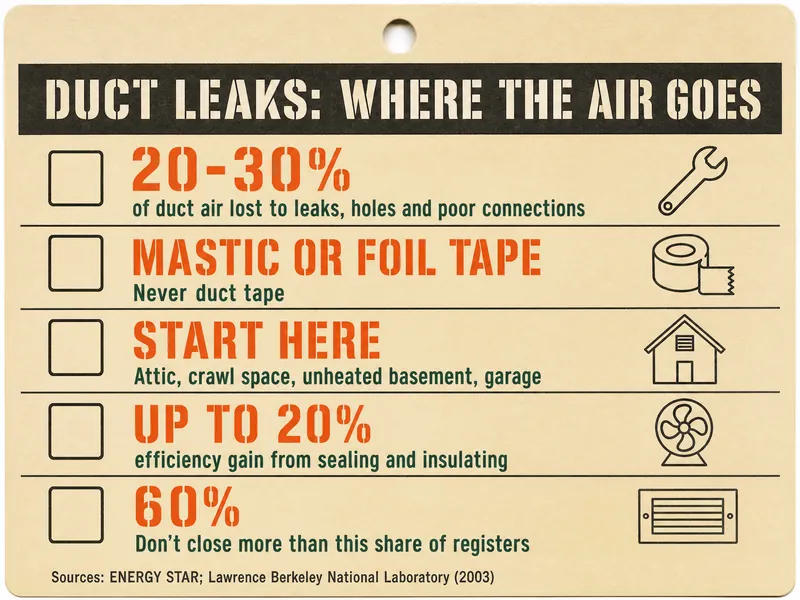
- In a typical house, about 20 to 30 percent of the air moving through ducts is lost to leaks, holes and poor connections, according to ENERGY STAR's duct sealing page.
- Sealing and insulating ducts can improve heating and cooling efficiency by as much as 20 percent, ENERGY STAR says.
- DOE's Energy Saver Guide (2022) says ducts leaking into an attic or crawl space can add hundreds of dollars a year to a bill.
- Use mastic or metal-backed foil tape. ENERGY STAR says never to use duct tape, because it doesn't last.
- A 2003 Lawrence Berkeley National Laboratory study of California houses found closing registers raised energy use, and it advised against closing more than 60 percent of them.
- DOE says all duct sealing should be tested by a qualified professional for combustion safety and airflow.
How much air do leaky ducts waste?
ENERGY STAR puts the loss at about 20 to 30 percent of the air that moves through the duct system in a typical house, through leaks, holes and poorly connected joints. That is air you paid to heat or cool, dumped into the attic, crawl space or wall cavity. The agency says the result is higher utility bills and rooms that stay uncomfortable no matter where the thermostat sits.
The dollar figure depends on the house. DOE's Energy Saver Guide (2022) says ducts leaking into an attic or crawl space can add hundreds of dollars a year to heating and cooling bills. Heating and cooling are the biggest slice of the energy bill to begin with: ENERGY STAR says nearly half of the energy used in a home goes to them.
The upside is real but capped. ENERGY STAR's heating and cooling page says sealing and insulating ducts can improve system efficiency by as much as 20 percent. Read "as much as" as a ceiling, not a promise; a house with tight ducts inside the living space has less to gain.
How do you find duct leaks?
Start with the symptoms ENERGY STAR lists for poorly performing ducts: high summer and winter bills, rooms that are hard to heat or cool, stuffy rooms that never feel right, ducts that run through an attic, crawl space or garage, and tangled or kinked flexible ducts. Two or three of those together is a good reason to go look.
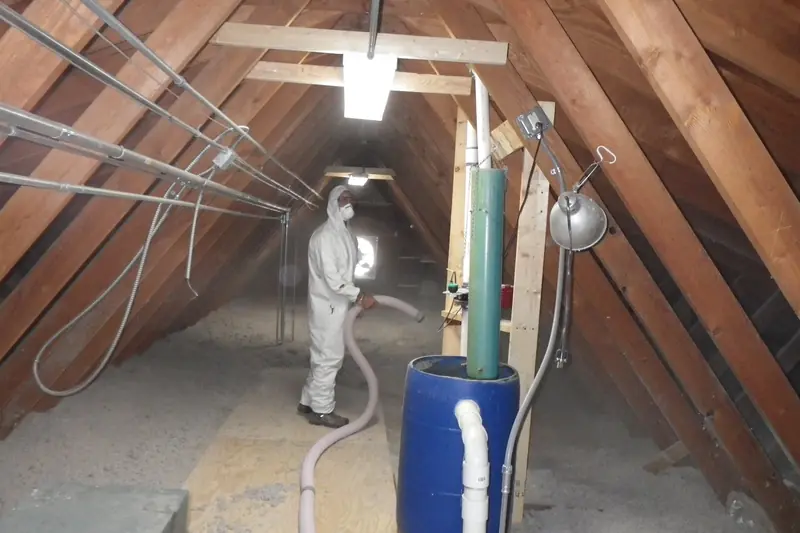
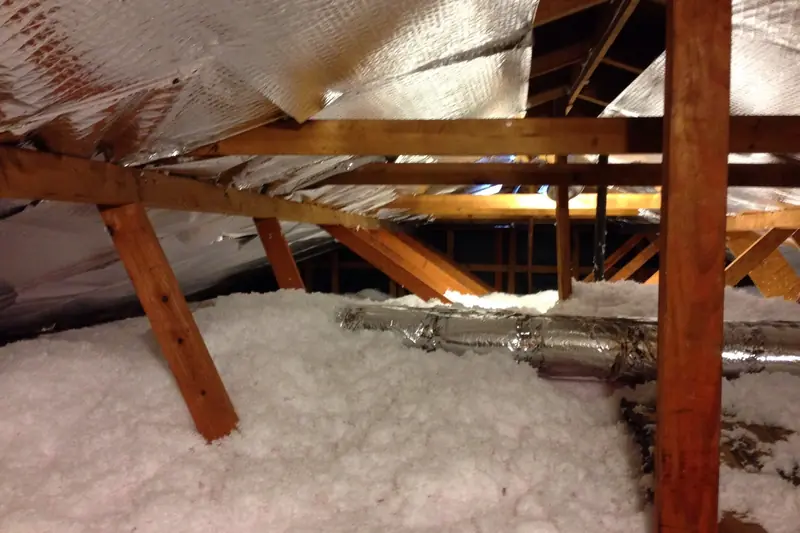
Then look where leaks cluster. ENERGY STAR names the connections at vents and registers, where the boot meets the floor, wall or ceiling, as common places to find leaks and disconnected ductwork. In the attic or basement, check every joint, the elbows and the spot where branch ducts leave the main trunk. A duct that has slipped off its collar or a run of crushed flex duct is lost air you can see.
A professional can measure what you can't see. Weatherization audits, for one, include a blower-door test, according to DOE's weatherization page. Income-eligible households can get that audit and the sealing work through the Weatherization Assistance Program.
What should you seal ducts with?
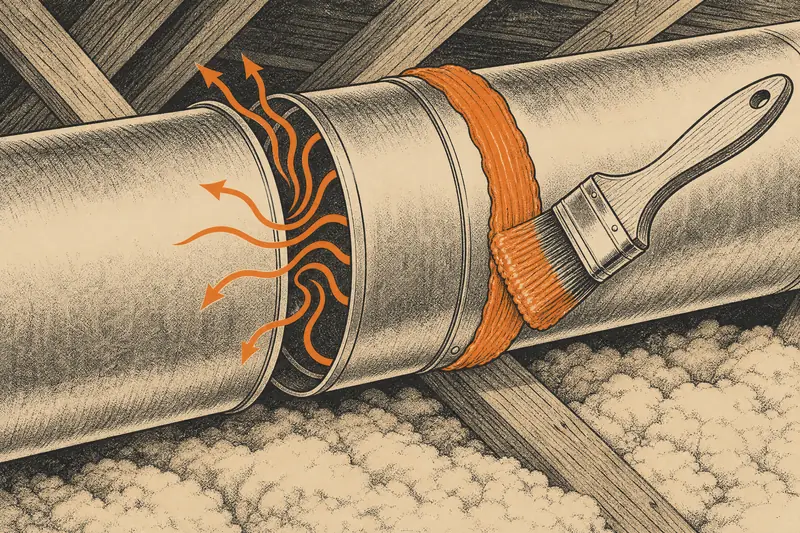
Seal duct seams and connections with mastic sealant or metal-backed foil tape, the two materials ENERGY STAR names. The same page is blunt about the gray cloth roll in the junk drawer: never use duct tape, as it is not long-lasting. Mastic brushes on like thick paint and suits odd-shaped joints; foil tape is quicker on straight seams.
Before you crawl into the attic, turn the system off at the thermostat and at the breaker so it isn't blowing air while the mastic sets. ENERGY STAR suggests sealing first the ducts that run through the attic, crawl space, unheated basement or garage, since leaks there lose air to the outdoors. After sealing, insulate the ducts you can reach in those same spaces.
| Material | ENERGY STAR's view | Where it fits |
|---|---|---|
| Mastic sealant | Use it on seams and connections | Joints, elbows, boots, irregular gaps |
| Metal-backed (foil) tape | Use it on seams and connections | Straight seams, collars, quick fixes |
| Cloth duct tape | Never: it is not long-lasting | Nowhere on a duct |
| Duct insulation | Insulate the ducts you can reach after sealing | Attic, crawl space, unfinished basement, garage |
Should you close vents in unused rooms?
No: closing registers to save money tends to backfire. Lawrence Berkeley National Laboratory modeled the practice in 2003 for a typical California house with ducts outside the conditioned space and found that register closing led to increased energy use across a wide range of climates, leak levels and numbers of closed registers. Note the scope: houses whose ducts ran through unconditioned space, which is where leaks lose air to the outdoors.
The study also flagged equipment risks. It advised against closing more than 60 percent of registers, noting that furnaces may run on their high-limit switch and cooling coils may freeze. DOE's guide asks the opposite of closing: keep registers clear of furniture, carpeting and drapes.
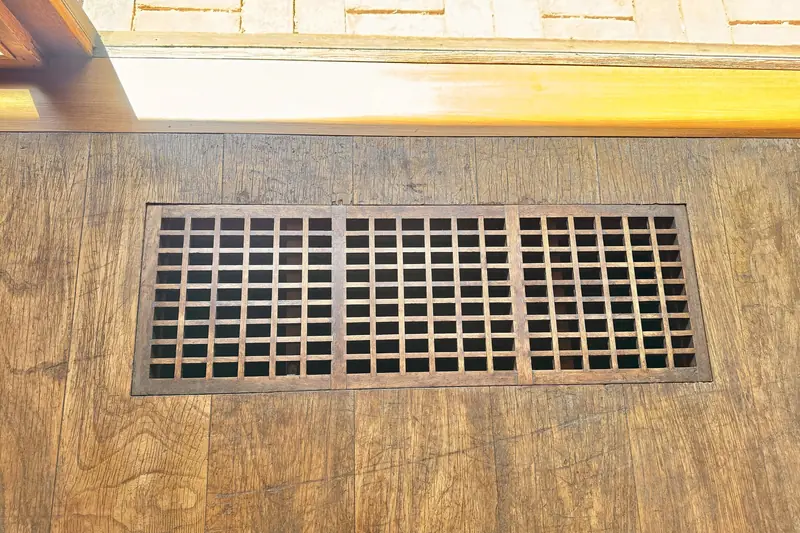
If a register is bent, rusted or rattling, a replacement is a simple swap. Supply-house register and grille listings show the sizes they come in; PlumbingSupplyAndMore shares owners with Penny Damper. While the old one is out, seal the gap between the duct boot and the floor with mastic or foil tape, the joint ENERGY STAR singles out.
- 20–30 percentshare of duct air lost in a typical houseENERGY STAR
- 20 percentmost efficiency gained by sealing and insulating ductsENERGY STAR
- 60 percentshare of registers LBNL says not to close beyondLawrence Berkeley National Laboratory (2003)
- Hundreds of dollarsyearly cost DOE puts on ducts leaking to an attic or crawl spaceU.S. Department of Energy, Energy Saver Guide (2022)
When is duct sealing a job for a pro?
Hire it out when the ducts are buried in walls, ceilings or floors, when the house has a gas or oil furnace or water heater, or when you want the result measured. ENERGY STAR notes that ducts are often concealed, which makes repairs difficult, and that most heating and cooling contractors also repair ductwork.
Combustion safety is the main reason. DOE's guide says all duct sealing should be tested by a qualified professional to ensure combustion safety and proper airflow, because tightening ducts changes how air moves through a house with fuel-burning equipment. Keep working carbon monoxide alarms on every level either way.
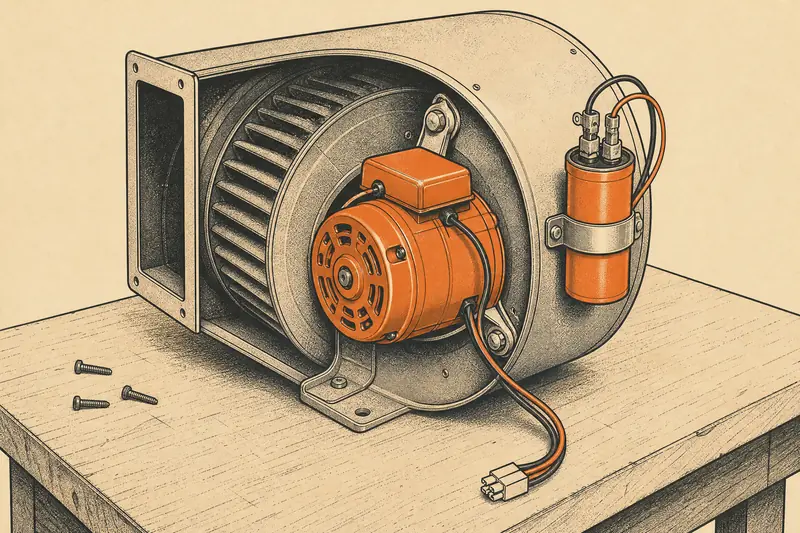
Ask any contractor to test before and after and to show you the numbers, and get the scope and price in writing. Weak airflow at one register can also come from a failing blower; the blower motor page covers that repair. If you're unsure, call a licensed technician.
How these numbers were checked
Built from ENERGY STAR's duct sealing and heating and cooling pages, DOE's Energy Saver Guide (2022) and weatherization pages, and Lawrence Berkeley National Laboratory's 2003 register-closing study (California houses with ducts outside conditioned space), read in October 2026. Left out: contractor prices for duct sealing or testing, aerosol sealing claims, and any savings figure beyond ENERGY STAR's "as much as 20 percent".
More questions
Is duct tape really bad for ducts?
ENERGY STAR says never to use it on ducts because it is not long-lasting. Use mastic or metal-backed foil tape, which ENERGY STAR names for seams and connections.
Can I seal ducts myself?
ENERGY STAR says some homeowners take it on as a do-it-yourself project, starting with ducts in the attic, crawl space, unfinished basement and garage. Turn the system off first, and leave ducts inside walls to a contractor.
Will sealed ducts make rooms more comfortable?
ENERGY STAR says a well-designed, properly sealed duct system can make a home more comfortable, more energy efficient and safer. It is the same work that trims the bill.
Should flex duct be straight?
ENERGY STAR lists tangled or kinked flexible ducts among the signs of poorly performing ductwork. Straighten and support runs you can reach, and have crushed sections replaced.
Do I need to insulate ducts after sealing them?
ENERGY STAR pairs the two: seal first, then insulate the ducts you can access in attics, crawl spaces, unfinished basements and garages. Insulation without sealing still loses air through the joints.
Does closing vents in summer help the AC?
The LBNL study warns that closing too many registers can freeze cooling coils, and it found more energy use, not less, in the houses it modeled. Keep supply and return vents open.
Keep reading