Heat Pump Settings That Save Money
Short answer
Heat pump settings that save money are simple: pick Heat or Cool rather than Auto, choose one comfortable temperature and leave it, and keep backup and emergency heat for when they are needed.
Penny Damper bench notes · updated
Partner links on this page go to PlumbingSupplyAndMore, under the same ownership as Penny Damper. They are there for price reference and examples; no figure here depends on them. How partner links work
Jump to a section
Shop notes
- ENERGY STAR: "Unlike a furnace or boiler, heat pumps do not save energy by turning it down when you're away or asleep" (ENERGY STAR).
- DOE's rule is narrower: don't set a heat pump back manually if it brings on backup electric-resistance heat, which costs more (DOE Energy Saver Guide, 2022).
- A heat pump can deliver up to three times more heat energy than the electricity it uses (ENERGY STAR).
- Trane says aux heat is only a problem if it comes on and stays on when it is above 40 degrees outside.
- Emergency heat locks out the compressor and runs only the backup heat; Lennox warns the bill "can climb quickly" if it runs for days.
- About 13% of US households used a heat pump as their main heating equipment in 2020 (EIA).
What heat pump settings save the most money?
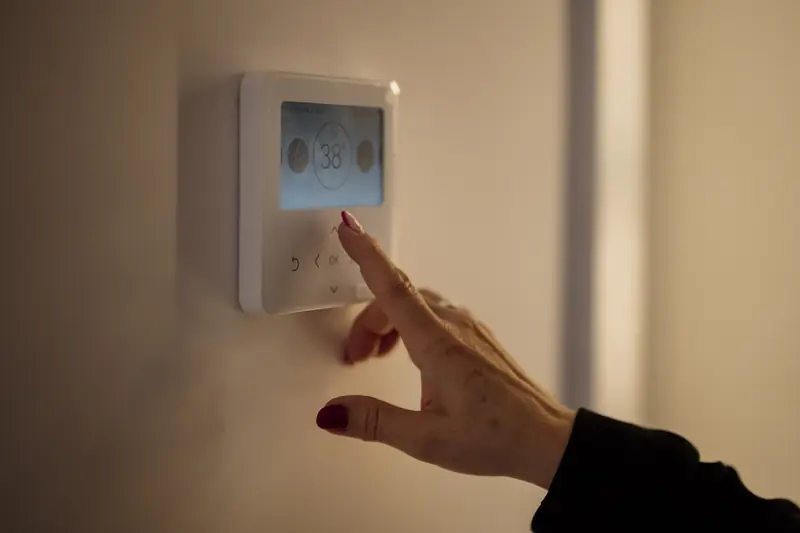
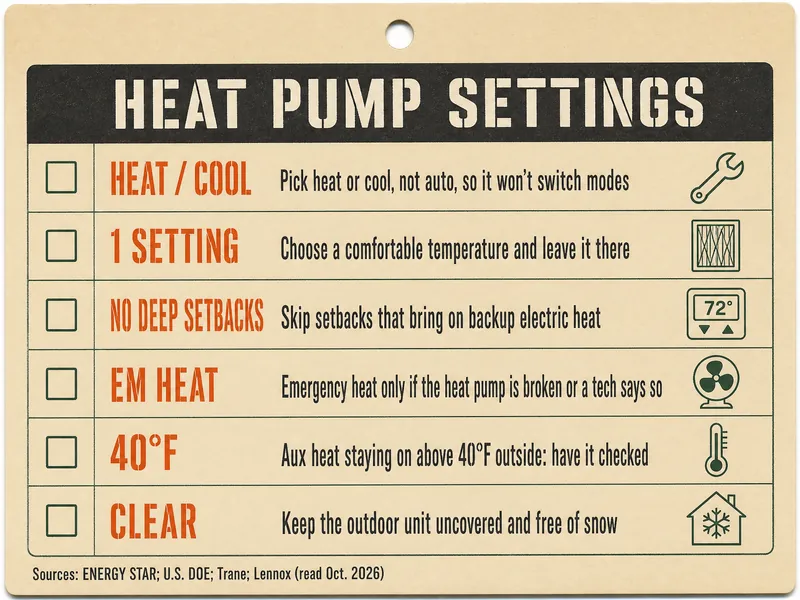
The settings that save most are Heat (not Auto) in winter, one steady temperature, and the fan on Auto. ENERGY STAR's air-source heat pump page says to "pick a comfortable temperature and leave it there," and to make sure the system is set to "heat" or "cool" so it doesn't switch modes on unseasonably warm or cold days.
On the fan, ENERGY STAR says to use the "auto fan" setting, or to turn the blower down to the gentlest speed that still spreads warm or cool air through the house. The reason all this matters is efficiency: ENERGY STAR says a heat pump "can deliver up to three times more heat energy to a home than the electrical energy it consumes." Any setting that hands the job to backup resistance heat gives that advantage away.
| Mode or setting | What it does | Cost note |
|---|---|---|
| Heat | Compressor moves heat indoors; backup heat helps when needed | Normal winter setting (Lennox) |
| Auto (heat/cool) | Switches modes on its own | ENERGY STAR says avoid it so the system doesn't switch on mild days |
| Aux heat (automatic) | Backup heat runs in very cold weather or during defrost | Electric strips use more energy than the heat pump (Trane) |
| Emergency heat (manual) | Locks out the compressor; backup heat only | Bill "can climb quickly" if it runs for days or weeks (Lennox) |
| Fan Auto | Blower runs only with heating or cooling | ENERGY STAR's suggested fan setting |
Should you set back a heat pump at night?
Only a little, and only with the right thermostat. DOE's Energy Saver Guide says: "Do not set back the heat pump's thermostat manually if it causes backup electric-resistance heating to come on. This type of heating is more expensive." Its setback advice for other systems comes with the line "If you have a heat pump, don't do this without a smart or programmable thermostat designed for use with heat pumps."
ENERGY STAR is blunter and says heat pumps don't save by being turned down at all. Read the two together: the simple default is ENERGY STAR's steady setting, and the exception is DOE's, a small setback handled by a thermostat that brings the heat back slowly enough to keep the strips off. A 7–10°F setback that works on a gas furnace (see thermostat settings) is the wrong habit here.
Heat pump numbers with their sources
- 3xheat delivered compared with electricity used, at mostENERGY STAR
- 5°Fcoldest test temperature in ENERGY STAR's cold-climate testingENERGY STAR
- 40°Fabove this, aux heat that stays on needs a lookTrane
- 13%US households using a heat pump as main heat, 2020EIA
- 18.16¢average US residential price per kWh, August 2026EIA
What is emergency heat and when should you use it?
Emergency heat is a manual setting that shuts off the heat pump and runs only the backup heat, and it is meant for when the heat pump is broken. Honeywell Home's support page says the feature "locks out the heat pump compressor so that only backup heat is used," and that it is "typically used until a heating and/or cooling contractor can troubleshoot or fix the heat pump system" (Honeywell Home).
Lennox lists the times it makes sense, including when "your HVAC technician specifically instructs you to turn it on while waiting for a repair appointment or parts to arrive," or when the outdoor unit is frozen solid or damaged (Lennox). Otherwise the thermostat "should typically be on 'Heat' or 'Auto.'" Lennox's warning is the money part: "your energy bill can climb quickly if emergency heat runs for days or weeks."
To see why, read the rating on your own backup heater's label. As an example only, a strip heater labeled 10 kW draws 10 kWh each hour it runs: 10 × 18.16¢ ≈ $1.82 an hour at EIA's August 2026 average price. ENERGY STAR's up-to-three-times figure means the heat pump itself can move the same heat for as little as a third of that, which is the whole point of owning one.
What happens when a heat pump defrosts in winter?
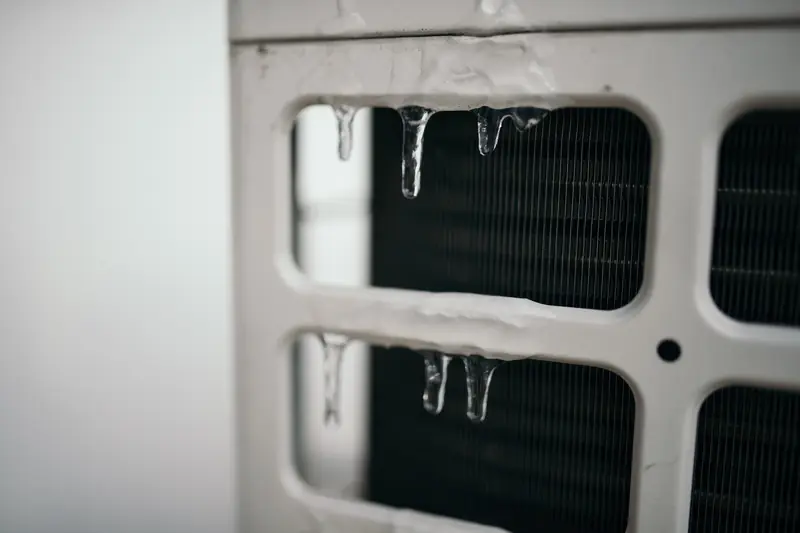
In cold, damp weather the outdoor coil frosts over, and the unit runs a defrost cycle to clear it; that is normal. Trane says "when the heat pump is defrosting, you can see frost or ice on the outdoor unit," and that aux heat may come on during defrost to keep indoor air warm (Trane, aux heat).
Trouble looks different. Trane says "if it keeps running but hasn't defrosted after an hour, you may need to call for heat pump repair," and that aux heat is only a bad sign "if it comes on and stays on when temperatures are above 40 degrees." Never chip ice off the coil, and never pour hot water or aim a heater at it.
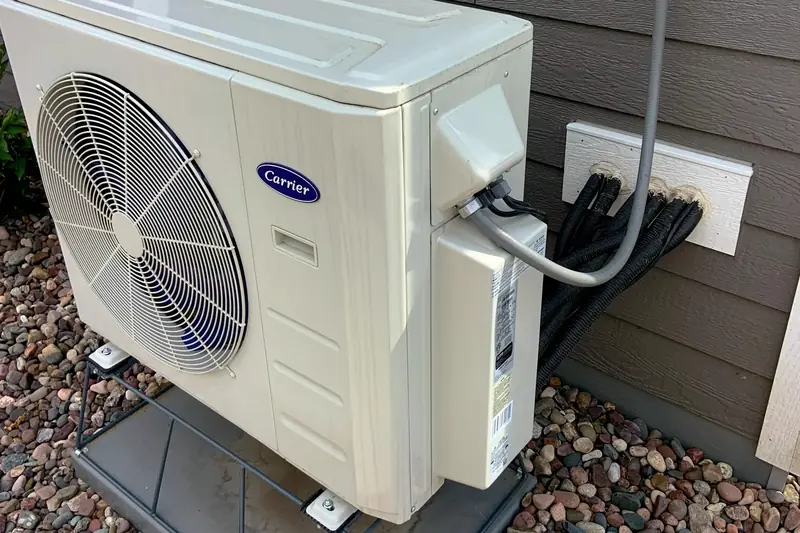
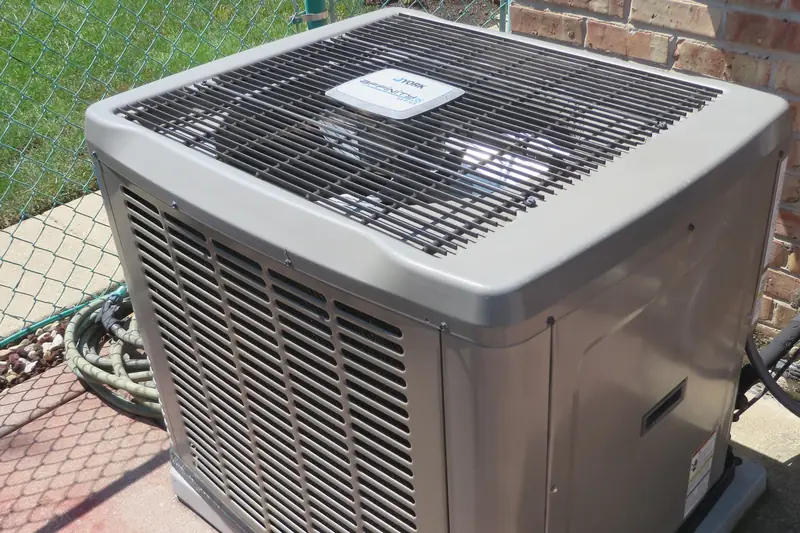
The outdoor unit needs open air. The 2009 ENERGY STAR guide says "heat pumps need to be left uncovered to properly operate during the winter," and Trane tells owners to "make sure the heat pump isn't covered with or surrounded by snow." Clearing snow by hand or with a broom, with the system off at the thermostat and the outdoor disconnect, is safe homeowner work; anything inside the cabinet is not. Refrigerant, wiring and the defrost control board are for a licensed technician. If you're unsure, call a licensed technician.
Which thermostat works with a heat pump?
A heat pump needs a thermostat built for heat pumps, with separate control of the backup heat. DOE's guide says to "install or have a professional install a smart or programmable thermostat with functions suitable for a heat pump." Product listings say so in the name, usually as "heat pump" with a count of heat and cool stages.
For price reference, common non-Wi-Fi thermostats were listed at $30.44 to $91.34 at PlumbingSupplyAndMore on October 27, 2026 (part only); the Honeywell T4 Pro, a programmable model whose listing names single-stage heat pump systems, was $61.76. That supply house and Penny Damper have the same owners. Match the stage count to your equipment, and have the installer confirm the wiring before the old thermostat comes off.
What upkeep keeps a heat pump cheap to run?
Clean filters and a clear outdoor unit do most of it. DOE's guide says to "clean or change filters once a month or as needed, and maintain the system according to manufacturer's instructions." The MERV ratings page covers which filter to buy, and the HVAC upkeep hub lists the rest of the safe jobs.
Watch the bill and the thermostat display for aux or emergency heat that runs longer than it should. A heat pump that won't cool in summer has its own checklist on AC not cooling.
How these numbers were checked
This page is based on ENERGY STAR's air-source heat pump page and its 2009 heating and cooling guide, DOE's Energy Saver Guide (2022 PDF), Trane's article on auxiliary heat, Honeywell Home's support page on emergency heat, Lennox's article on emergency heat, EIA's household energy use page and EIA's Electric Power Monthly table for August 2026, each read on October 27, 2026; the thermostat price range is what PlumbingSupplyAndMore listed that day. The strip-heater cost is a worked example from a label rating, not a measured figure. Left out: lifespans, brand comparisons and any claim about steam from the outdoor unit, which no source fetched describes.
More questions
What temperature should a heat pump be set at in winter?
No agency gives a heat-pump-specific number. DOE's general winter suggestion is no higher than 68°F, and ENERGY STAR says to pick a comfortable temperature and leave it there. Settle on one figure rather than moving it up and down.
Why does the thermostat say aux heat?
Aux heat is the backup heat coming on automatically, either because it is too cold outside for the heat pump to keep up or because the unit is defrosting (Trane). It is normal in short bursts. If it stays on when it is above 40 degrees outside, have the system checked.
Is it bad to leave a heat pump on emergency heat?
It doesn't harm the house, but it costs more. Lennox says the bill can climb quickly if emergency heat runs for days or weeks. Use it while you wait for a repair, or when a technician tells you to.
Should you cover a heat pump in winter?
No. ENERGY STAR's guide says heat pumps need to be left uncovered to operate in winter, because they run all season. Keep snow and ice clear of the coil and the top grille.
Is Auto mode on a heat pump thermostat a bad idea?
ENERGY STAR says to set the system to heat or cool so it does not switch modes on unseasonably warm or cold days. Lennox lists Auto as a normal setting, so it is not dangerous. It can simply waste energy by flipping to cooling on a mild afternoon.
How long should a heat pump defrost cycle last?
Trane doesn't give a minute count, but says that if the unit keeps running and hasn't defrosted after an hour, it may need repair. A coil that stays iced over for longer than that is a service call.
Does a heat pump need a different filter from a furnace?
No, the same MERV advice applies. DOE says heat pump owners should clean or change filters once a month or as needed, because the system runs in both heating and cooling seasons.
Related settings and upkeep